
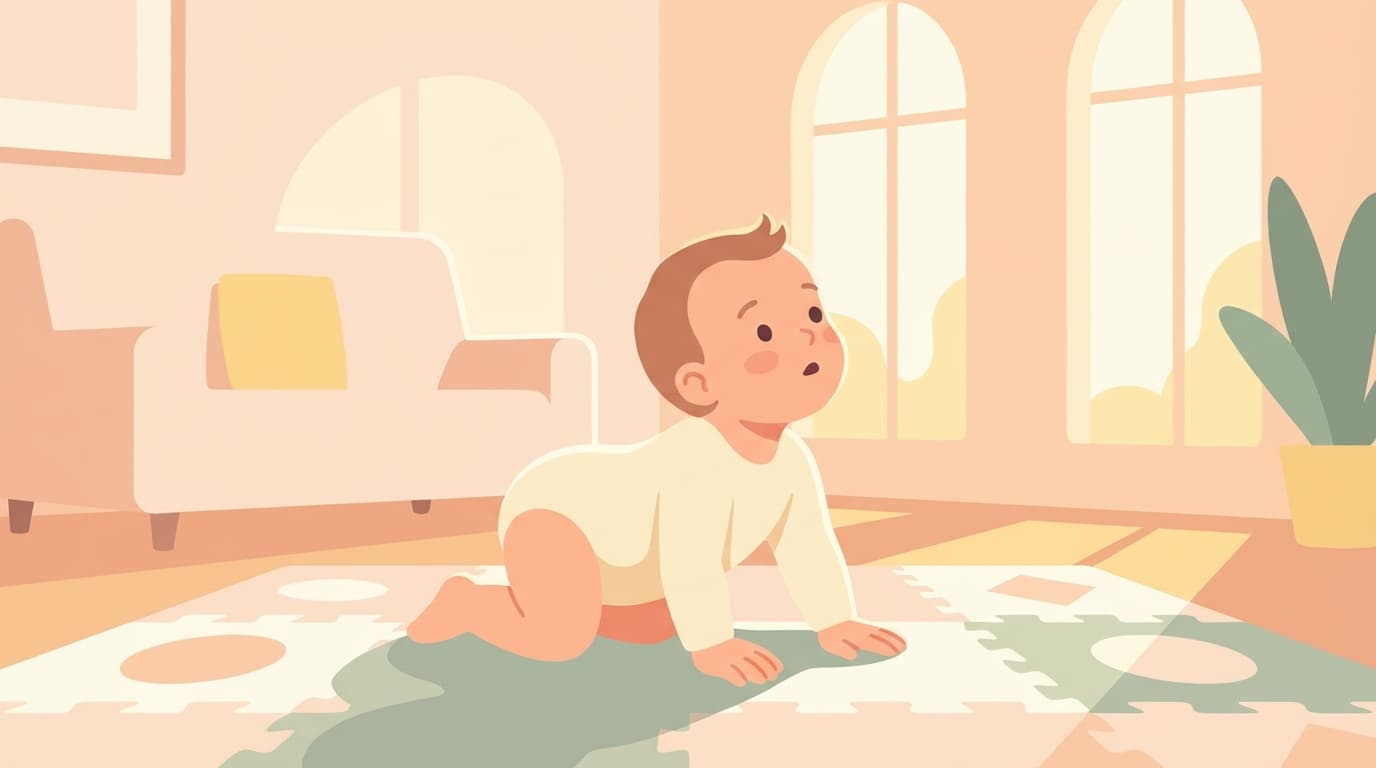
Most babies start crawling between 7 and 10 months, with the sweet spot around 8 to 9 months. Some babies crawl as early as 6 months, others skip crawling entirely and go straight to walking. Both are normal.
Crawling is one of those milestones that gets parents checking the calendar. Your baby is six months old, sitting up fine, grabbing everything within reach, and you start wondering: shouldn't they be moving by now? But that range is loose. Some babies are army-crawling across the living room at 6 months. Others are perfectly happy sitting in one spot until 11 months, then stand up and walk like they've been waiting for the right moment.
And some babies never crawl at all.
The CDC dropped crawling from its milestone checklist
This surprises most parents. In February 2022, the CDC updated its "Learn the Signs. Act Early" developmental milestones and removed crawling entirely. Not because crawling doesn't matter, but because the research data couldn't support a clean cutoff.
The updated checklists now require that 75% of children achieve a milestone by a given age (previously 50%). For crawling, there wasn't enough consistent data to meet that bar. Definitions of "crawling" vary across studies. The age range is wide. And a meaningful number of babies skip it entirely.
Pediatric physical therapists pushed back on the decision. They point to research showing crawling builds core strength, improves hand coordination, and may even affect pencil grip years later. The debate isn't settled. But the practical takeaway for parents: the CDC not listing crawling doesn't mean your baby shouldn't crawl. It means there's no single "right" age when they should.
Not all crawling looks the same

This is the part that trips people up. You're watching for the classic hands-and-knees crawl, but your baby is doing something completely different. All of these count:
The belly crawl. Arms pull, legs drag. Looks like a tiny soldier clearing a barbed wire obstacle. Usually shows up around 7 to 8 months before traditional crawling.
The butt scoot. Sitting upright, scooting forward using one or both legs. Some babies move this way for months and never do a hands-and-knees crawl. It looks silly and it works fine.
The bear walk. Hands and feet on the floor, butt in the air. Less common but some babies prefer it, especially on hard floors.
Then there's the textbook version: alternating hands and knees, opposite arm and leg moving together. This is the one in all the stock photos. Plenty of babies do something else entirely and develop perfectly normally.
The asymmetric crawl. One knee drags while the other leg pushes. Worth mentioning to your pediatrician if it persists for more than a few weeks, since consistent asymmetry can sometimes indicate a strength imbalance.
According to Cleveland Clinic pediatric physical therapist Dr. Christin Close, crawling "provides a full-body workout that strengthens the hands, arms, legs, core, hips and shoulders for later skills like walking and running." The style matters less than the fact that they're moving.
What actually helps babies start crawling
You don't need to teach a baby to crawl. But you can set up conditions that make it more likely to happen on schedule.
Tummy time is the biggest one. Babies who spend time on their stomachs build the arm, shoulder, and core strength that crawling requires. If your baby hates tummy time (most do), even short sessions throughout the day add up. The AAP recommends starting tummy time from the first day home from the hospital.
Put interesting things just out of reach. A toy they want, your phone (the real motivator), a crinkly wrapper. Babies need a reason to move. If everything they want comes to them, they don't.

Give them floor time on a firm surface. Babies who spend most of their day in bouncers, swings, and car seats don't get the same floor practice. That doesn't mean those things are bad. Just balance the day with time on the floor.
Skip the baby walker. The AAP has recommended against infant walkers for years. They don't help babies walk sooner and they cause thousands of ER visits annually. Canada banned them entirely in 2004.
When to bring it up with your pediatrician
There's no single "your baby should be crawling by now" cutoff. But there are signs that suggest you should ask about it:
- By 9 or 10 months, your baby shows no interest in moving toward things. They don't reach, scoot, roll, or attempt any kind of forward motion.
- Your baby can't sit independently by 9 months.
- One side of the body consistently seems weaker or stiffer than the other.
- Your baby was very premature. Adjusted age matters here. A baby born two months early is developmentally closer to a baby two months younger.
None of these on their own mean something is wrong. But your pediatrician can refer you to early intervention or a pediatric physical therapist if there's a concern, and early evaluation is always better than waiting.
Babies who skip crawling
Some babies go straight from sitting to pulling up to walking. No crawling phase at all. This is why the CDC removed it from the checklist: it's not a required step in motor development.
That said, crawling does useful things. It builds bilateral coordination (using both sides of the body together), strengthens the shoulder girdle, and gives babies practice with weight-bearing through their hands. Babies who skip crawling may benefit from other activities that build the same skills: playing on the floor, reaching across the body, climbing on soft surfaces.
If your baby skips crawling and walks on time, there's usually nothing to worry about. If they're not crawling AND not pulling up or cruising by 12 months, that's worth discussing with your doctor.
The crawling-to-walking gap
Once your baby starts crawling, walking usually follows within a few months. Most babies walk independently between 12 and 15 months, though the updated CDC milestone puts solo walking at 15 months (meaning 75% of babies walk by then, not that 15 months is "late").
The in-between stage, pulling up on furniture, cruising along the couch, standing and wobbling, is where your camera roll explodes. These are the weeks you'll want to look back on.
If you're logging milestones in Aanvi, crawling is a good one to date. Parents almost always remember the first steps but forget when crawling started, and the gap between the two tells you something about your baby's developmental pace.
Common Questions
Is it normal for a baby to skip crawling?
Yes. Some babies go straight from sitting to pulling up to walking, skipping crawling entirely. This is one reason the CDC removed crawling from its milestone checklist in 2022. If your baby isn't crawling but is pulling up and cruising by 12 months, they're developing normally.
Why did the CDC remove crawling from its milestones?
The CDC updated its milestones in 2022 to require 75% of children to reach each milestone by a given age. Crawling didn't meet that bar because definitions vary, the age range is wide, and many babies skip it. Pediatric PTs still consider crawling important for core strength and coordination.
Does tummy time help babies crawl sooner?
It definitely helps build the foundation. Tummy time strengthens the arms, shoulders, and core muscles that crawling requires. The AAP recommends starting tummy time from the first day home from the hospital, even in short sessions throughout the day.
Should I worry if my baby crawls with an unusual style?
Most crawling styles, like belly crawling, butt scooting, and bear walking, are perfectly normal. The one to watch for is a persistent asymmetric crawl where one side consistently seems weaker. Mention it to your pediatrician if it lasts more than a few weeks.
Curious whether your baby's sleep changes around the crawling stage? It often does. Check out our sleep calculator to see recommended hours by age.