
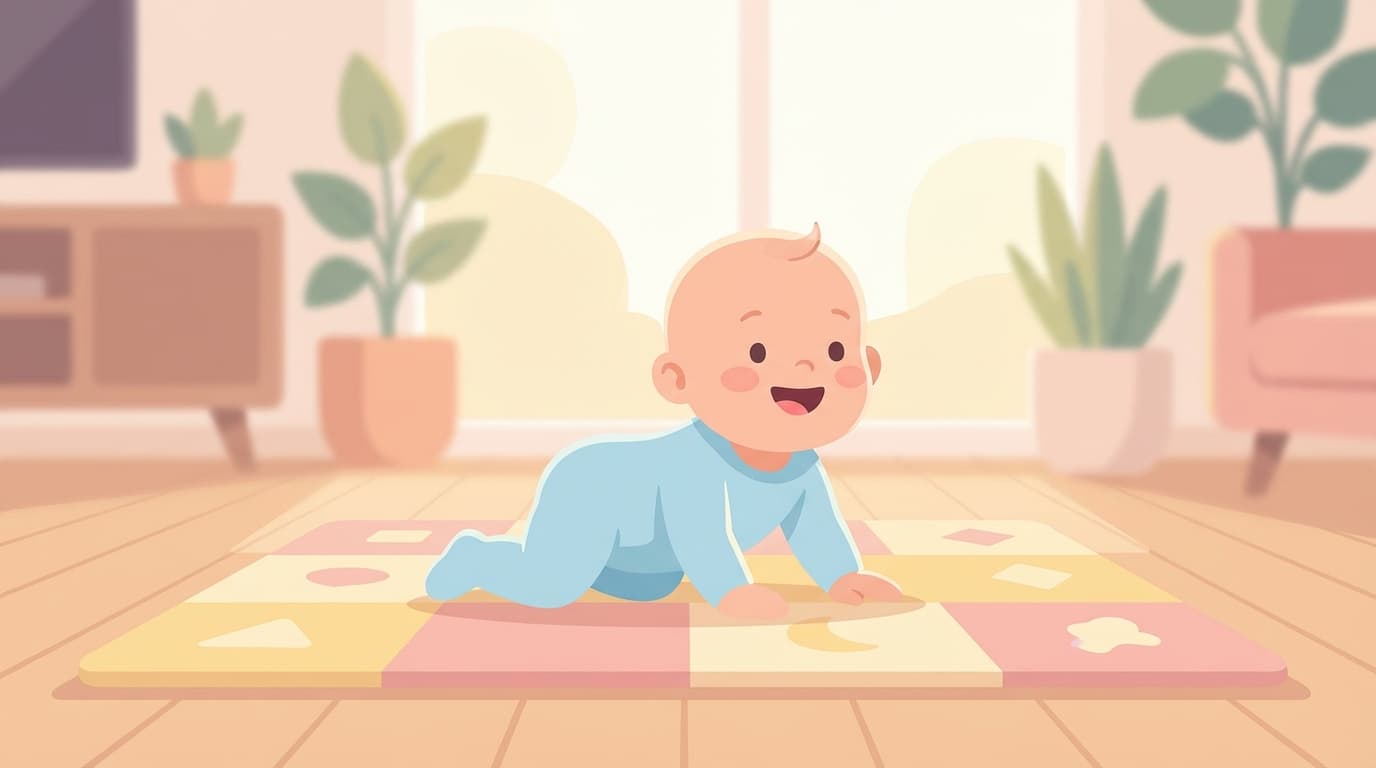
Babies need to work up to about 60 minutes of total tummy time per day by 3 months, spread across multiple short sessions. The AAP recommends starting from day one with 3-5 minute sessions, and a 2020 systematic review in Pediatrics confirmed that tummy time is consistently linked to earlier rolling, crawling, and better motor development. Babies with reflux, torticollis, or other conditions may need a modified approach, so ask your pediatrician.
You lay your baby on their stomach. They last about four seconds before their face is in the mat and they're screaming. You pick them up, feel guilty, and try again tomorrow. Same result. This is the most common tummy time experience, and nobody warns you about it. The pediatrician says "make sure you're doing tummy time," like it's a simple box to check. For many babies, it is not a simple box to check. It's a daily battle. But it does matter, and the amount of time that makes a difference is smaller than you think.
Why it matters (the short version)
When the AAP launched the Back to Sleep campaign in 1994, telling parents to put babies on their backs to sleep, the U.S. SIDS rate dropped by more than 50%. But there was a side effect. Babies who spent almost all their time on their backs started hitting motor milestones later. Pediatricians also noticed a rise in positional skull flattening, with some studies reporting rates as high as 46% in young infants.
Tummy time is the fix. When a baby is on their stomach, they have to work against gravity to lift their head. That builds the neck, shoulder, and core muscles they'll need to roll over, sit up, and eventually crawl. A 2020 systematic review published in Pediatrics analyzed 16 studies covering 4,237 infants across eight countries and found that tummy time was consistently associated with more advanced gross motor development, including earlier rolling, crawling, and moving while prone.
The same review found a link between tummy time and reduced risk of brachycephaly (flat head in the back). The evidence for preventing asymmetrical flat spots (plagiocephaly) was less clear, but the motor benefits alone make the case.
How much, by age
The AAP recommends starting tummy time the day you bring your baby home from the hospital. Here's what the progression looks like:
Newborn to 6 weeks: Two to three sessions a day, 3 to 5 minutes each. Fifteen minutes total across the whole day. If your newborn does two minutes before they start crying, that's fine.
6 weeks to 2 months: Work up to 15 to 30 minutes total per day. Still broken into short sessions. Nobody is expecting a newborn to do a 20-minute stretch.
3 to 4 months: KidsHealth (Nemours) recommends working up to about an hour of total tummy time daily by 3 months, still spread across the whole day. Some babies will happily play for 10 minutes on their stomach by now. Others still hate every second.
5 to 6 months: Most babies have enough head and upper body strength to tolerate longer sessions. Many start enjoying tummy time around this age because they can actually see what's going on, push up on their arms, and reach for things. Some are close to rolling, which effectively ends the tummy time debate because they'll put themselves on their stomach.
The numbers above are goals, not requirements. A baby who gets 10 minutes a day will still learn to crawl. The Hewitt et al. systematic review found that benefits are dose-dependent (more tummy time correlates with earlier milestones) but it's not a cliff. There's no threshold below which development stalls.
Your baby isn't broken for hating it
If your baby screams during tummy time, you should know that this is the norm, not the exception. Babies spend their first weeks almost exclusively on their backs. Being flipped over is disorienting, and they don't have the strength to do anything about it. Of course they're upset.
The problem isn't that your baby is unusually difficult. The problem is that lifting your head when you weigh 8 pounds and have almost no muscle tone is genuinely hard. It's like someone asking you to do planks when you've never exercised. Unpleasant, exhausting, and you'd complain too.
A few things that make it worse: doing tummy time right after eating (reflux makes it miserable), doing it when the baby is already tired or hungry, and putting them flat on a hard surface with nothing interesting to look at. All of these are fixable.
What actually helps
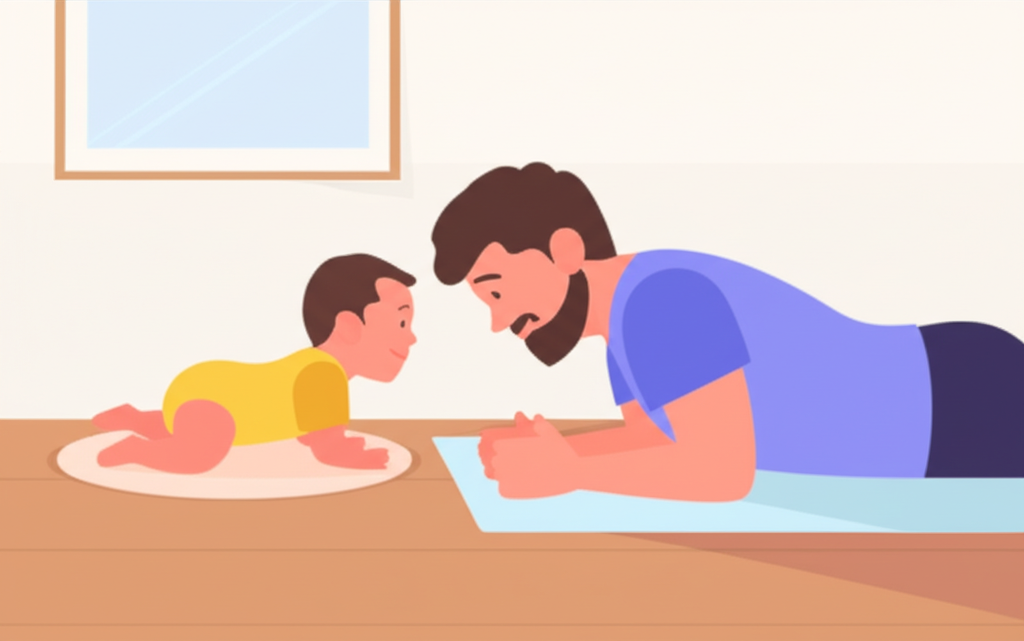
Get on the floor yourself. This is the single most effective thing you can do. Babies staring at carpet fibers have zero motivation to lift their heads. Get down at their level, face to face, and talk to them. More effective than any product or hack you can buy.
If the floor is a nonstarter for your newborn, it doesn't have to be the floor. Lie on your back and put them on your chest, stomach-down. Lay them across your lap while you sit. Both of these count as tummy time. The AAP includes chest-to-chest as a valid position, and the slight incline actually makes it easier for babies who face-plant on a flat surface.
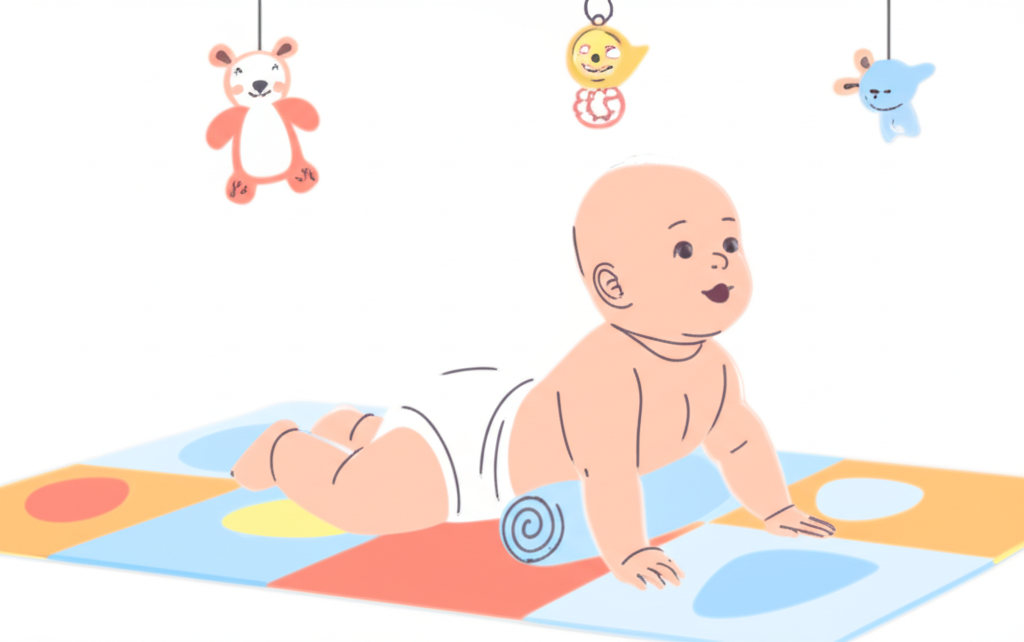
A rolled-up towel or receiving blanket under the chest, tucked just under the armpits, gives them a slight boost. Pathways.org recommends this as one of the most effective modifications. It takes them from "my face is in the ground and I'm furious" to "I can sort of see things and this is tolerable."
Timing matters more than most parents realize. Right after a nap, with a clean diaper and an empty-ish stomach? Much better than post-feed when reflux turns the whole thing into a spit-up event. And five one-minute sessions across the day are better than one five-minute stretch that ends in crying. If they make it 90 seconds and start fussing, pick them up. Try again at the next diaper change.
When to talk to your pediatrician
Some babies don't just dislike tummy time. They genuinely can't do it. If your baby arches their back dramatically, always turns their head to one side, or seems to have no head control at all by 2 months, mention it at your next well-child visit.
Torticollis (a tightness in the neck muscles that causes the head to tilt to one side) is common in newborns and can make tummy time uncomfortable. It's treatable with stretching exercises and sometimes physical therapy, but it's easy to miss if you don't know what you're looking for. Your pediatrician checks for this, but if tummy time seems disproportionately difficult for your baby, bring it up.
When it stops being a thing
Tummy time as a structured activity becomes irrelevant once your baby can roll over. The CDC milestone checklist lists rolling from tummy to back as a 6-month milestone, though some babies figure it out earlier and some take longer. At that point they're choosing their own positions, flipping to their stomach to play and working on sitting and crawling without any structured help from you.
The strength they built during those early sessions is what makes the rest possible. It doesn't feel that way when you're watching a red-faced baby scream into a play mat for 90 seconds. But the connection between prone time and the motor milestones that follow is one of the more consistent findings in pediatric development research. The rolling, the sitting, the crawling all start with a baby who spent enough time on their stomach to build the muscles that make those things happen.
Aanvi tracks those milestones against the CDC checklist on a single timeline, so when the pediatrician asks "when did they start rolling?" you have the date instead of a guess. The Milestone Tracker covers motor, language, and social milestones by age if you want to see what's next on the list.
Common Questions
How much tummy time does a newborn need?
Newborns need just 3-5 minutes per session, two to three times a day, for about 15 minutes total. The AAP recommends starting the day you bring your baby home. By 3 months, the goal is about 60 minutes total per day, still broken into short sessions throughout the day.
What if my baby hates tummy time?
Most babies hate tummy time at first -- that's the norm, not the exception. Get on the floor face-to-face with them, try chest-to-chest on your back (the AAP counts this), or place a rolled towel under their armpits for support. Five one-minute sessions are better than one five-minute crying stretch.
Does tummy time prevent flat head?
A 2020 systematic review in Pediatrics found that tummy time is associated with reduced risk of brachycephaly (flat head in the back). The evidence for preventing asymmetrical flat spots is less clear, but the motor development benefits -- earlier rolling, crawling, and sitting -- are well-established.
When can I stop doing tummy time?
Tummy time as a structured activity becomes unnecessary once your baby can roll over on their own, which the CDC lists as a 6-month milestone. At that point they'll choose their own positions and work on sitting and crawling naturally, using the strength they built during those early sessions.