
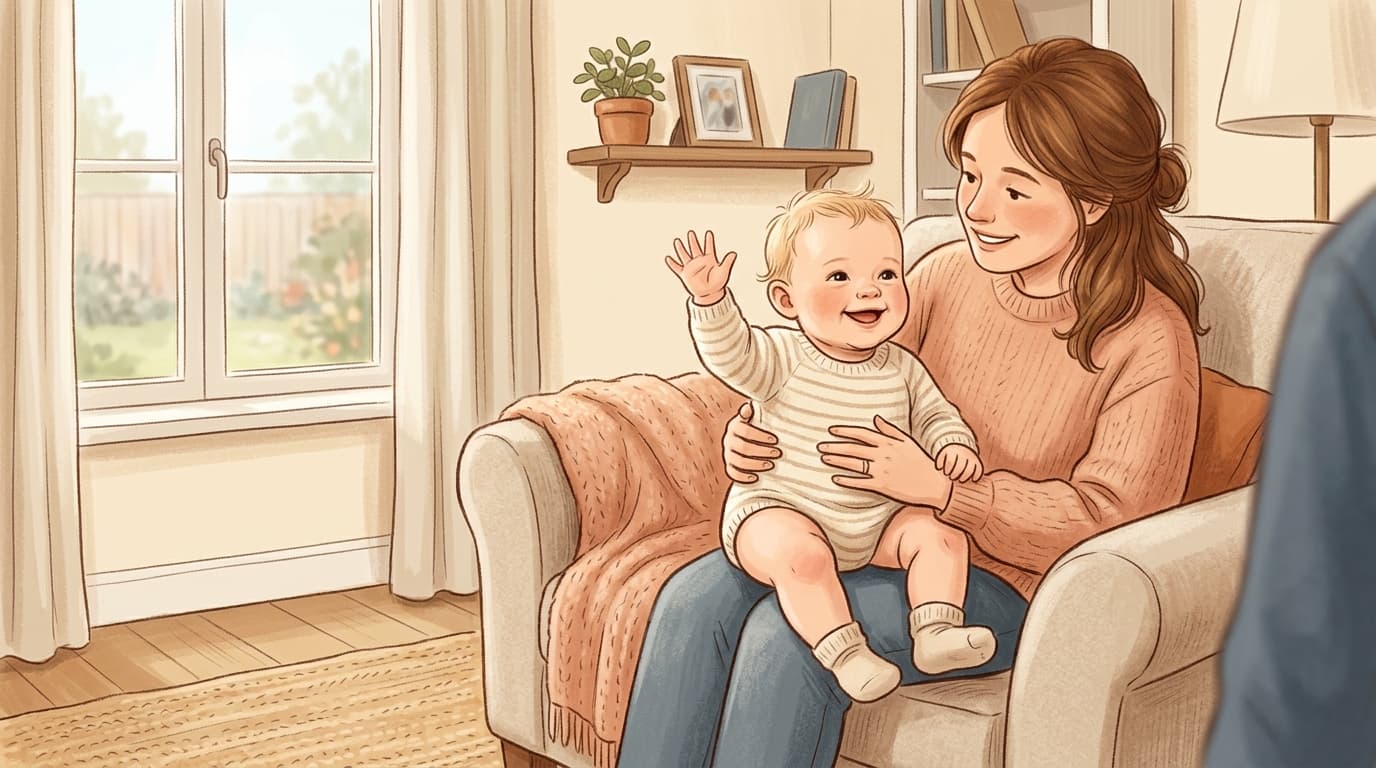
The first wave usually catches you off guard. You're leaving the room or handing the baby to someone, and a little hand goes up and flaps. It might be directed at the dog. It might be directed at nobody. But it's a wave, and it's one of those milestones that sneaks up on you.
When It Typically Happens
Most babies start waving between 9 and 12 months. The CDC milestone checklist includes waving as a 9-month social milestone, though many babies don't do it consistently until closer to 12 months.
Some babies will attempt a version of it as early as 7 months, usually after watching an older sibling or parent do it repeatedly. Others take until 14 or 15 months, and that's within normal range. Research on imitation milestones has found that full-term babies could imitate a bye-bye wave anywhere from 9 to 16 months.
The range is wide. The panic is usually premature.
What Waving Actually Means Developmentally
Waving isn't just a cute trick. It's one of the first signs that your baby understands social communication. They're learning that gestures have meaning, that people leave and come back, and that they can participate in a social exchange.
Developmentally, waving requires a few things to come together:
- Motor control to open and close the hand deliberately
- Imitation skills (watching you wave and copying it)
- Social awareness (understanding that waving is connected to greetings and goodbyes)
This is why waving tends to show up around the same time as clapping and pointing. These are all gestural communication milestones, and they usually arrive in a cluster between 9 and 14 months.
The Backwards Wave
Almost every baby does this. Instead of waving palm-out at the other person, they wave palm-in, basically waving at themselves. It looks like they're opening and closing their hand while staring at it.
This is completely expected. They're imitating what they see from their perspective. When you wave at a baby, they see your palm and fingers moving toward them. So they replicate that view. The outward-facing wave comes later, usually a few weeks after the backwards version.
How They Learn
Babies learn to wave by watching you do it. Repeatedly. The connection between the gesture and the moment (someone arriving, someone leaving) needs to happen enough times for the pattern to click.
What helps: wave every time you leave the room, every time someone walks in, every time you say bye on a video call. Pair it with the words "hi" and "bye" consistently. At some point, your baby will try it back.
What doesn't help: grabbing their hand and making them wave. It's tempting but it skips the part where they figure out the connection between the gesture and the social context.
The First Real Wave
The first wave is usually not a clean, confident wave at a specific person. It's more like a floppy hand motion in the general direction of someone who might be leaving, or might just be standing there. Your baby might wave at the wall. They might wave at dinner.
But at some point, they'll wave at someone leaving and look at you to see if you noticed. That's the real one. That's the moment they understood what it means.
If you're tracking milestones with Aanvi, the first wave is one of those firsts worth tagging with a note about what actually happened. "Waved at the pizza delivery guy" tells a better story than just checking a box. The Baby Milestone Tracker maps waving against the other social milestones by age.
When to Talk to Your Pediatrician
The AAP's developmental guidance suggests checking in if your baby isn't waving, pointing, or using other gestures by 12 months, especially if they're also not responding to their name or making eye contact. Your pediatrician can help determine whether it's just a timing thing or something worth looking into further.
Missing waving on its own is rarely a concern. Missing it alongside several other communication milestones is when it becomes worth a conversation.
Common Questions
Do babies wave before they clap?
Usually, but not always. Both are gestural milestones that emerge between 9 and 12 months. Some babies clap first because they discover the sound is entertaining. Others wave first because they've seen adults do it more often. The order doesn't indicate anything about development.
My baby waves at random objects. Is that normal?
Yes. They're practicing the gesture. The social targeting (waving at people who are actually leaving) comes with more experience. Waving at the lamp is just rehearsal.
Does waving count if they only do it sometimes?
It counts the first time they do it with any sort of intention. Consistency comes later. If they waved at grandma once and haven't done it since, they still waved. Your pediatrician will look for whether the skill is emerging, not whether it's reliable.
The first wave happens fast and usually when you're not ready for it. Aanvi lets you log milestones with photos and notes so you capture the context, not just the date. Try it for 7 days and start tracking before the next first catches you off guard.