

Most babies say their first real word between 12 and 14 months, though some get there as early as 9-10 months. By 18 months, most toddlers have several words they use consistently, and the vocabulary explosion between 18 and 24 months takes them from a handful to 200+ words.
Somewhere around 8 months, your baby will start babbling "dadadada" at the ceiling fan, and your partner will claim it counts. It doesn't. Not yet. But it's closer than you think. Language development is one of those things parents obsess over quietly. Nobody wants to be the one who asks "should my baby be talking by now?" at the pediatrician's office. But it's one of the most common questions pediatricians get, and the answer is less straightforward than you'd expect.
What counts as a first word
This is where most of the confusion lives. A "word" in the developmental sense doesn't mean your baby says it clearly, or even that it sounds exactly like the word. According to the American Speech-Language-Hearing Association (ASHA), a word counts when your baby uses a specific, consistent sound to refer to a specific thing. If they say "ba" every time they see a ball, that's a word. If they say "ba" at the wall, the dog, their foot, and the ball, that's babbling.
The key is intent. Does the sound have meaning behind it, and do they use it repeatedly for the same purpose? That's talking.
The actual timeline
It's a gradual ramp, not a single moment.
2-3 months: Cooing. Vowel sounds like "aah" and "ooh." Basically vocal cord experiments.
4-6 months: Babbling starts. Consonant-vowel combos like "ba," "da," "ma." Sounds like talking. It's not: they're doing mouth exercises.
6-9 months is when it gets interesting. Babbling becomes more complex, with repeated syllables like "bababa" or "mamama." Your baby also starts understanding tone. They can tell when you're happy versus angry, even though they don't know the words yet. The CDC milestone checklist includes responding to their own name and understanding "no" by 9 months.
Then around 9-12 months, real words start to emerge. Most babies say their first intentional word between 12 and 14 months, though some get there by 9 or 10 months. The AAP notes that by 12 months, most babies have 1-3 words they use consistently.
12-18 months is slow going. A handful of words, used deliberately. "Mama," "dada," "no," "more," "dog." Don't expect sentences or clarity. Pointing combined with a sound is communication working exactly as it should.
The 18-24 month period is where it blows up. Vocabulary jumps from maybe 20 words to 200+. Two-word combinations start appearing: "more milk," "daddy go," "no bath." Parents who were worried at 14 months are suddenly overwhelmed at 22 months. The pace is genuinely startling if you're not expecting it.
Why "dada" usually comes first
This annoys a lot of moms. The explanation is mechanical, not emotional: the "d" sound is easier for babies to produce than the "m" sound. As speech-language pathologists explain, the tongue's resting position naturally favors "d" and "b" sounds, which emerge early in babbling. "Mama" typically follows close behind. Both sounds develop around the same time, but "dada" often edges out first by a few weeks.
So "dada" coming first doesn't mean they love dad more. It means the "d" is just easier to get out. "Mama" usually follows within weeks.
The wide range of normal
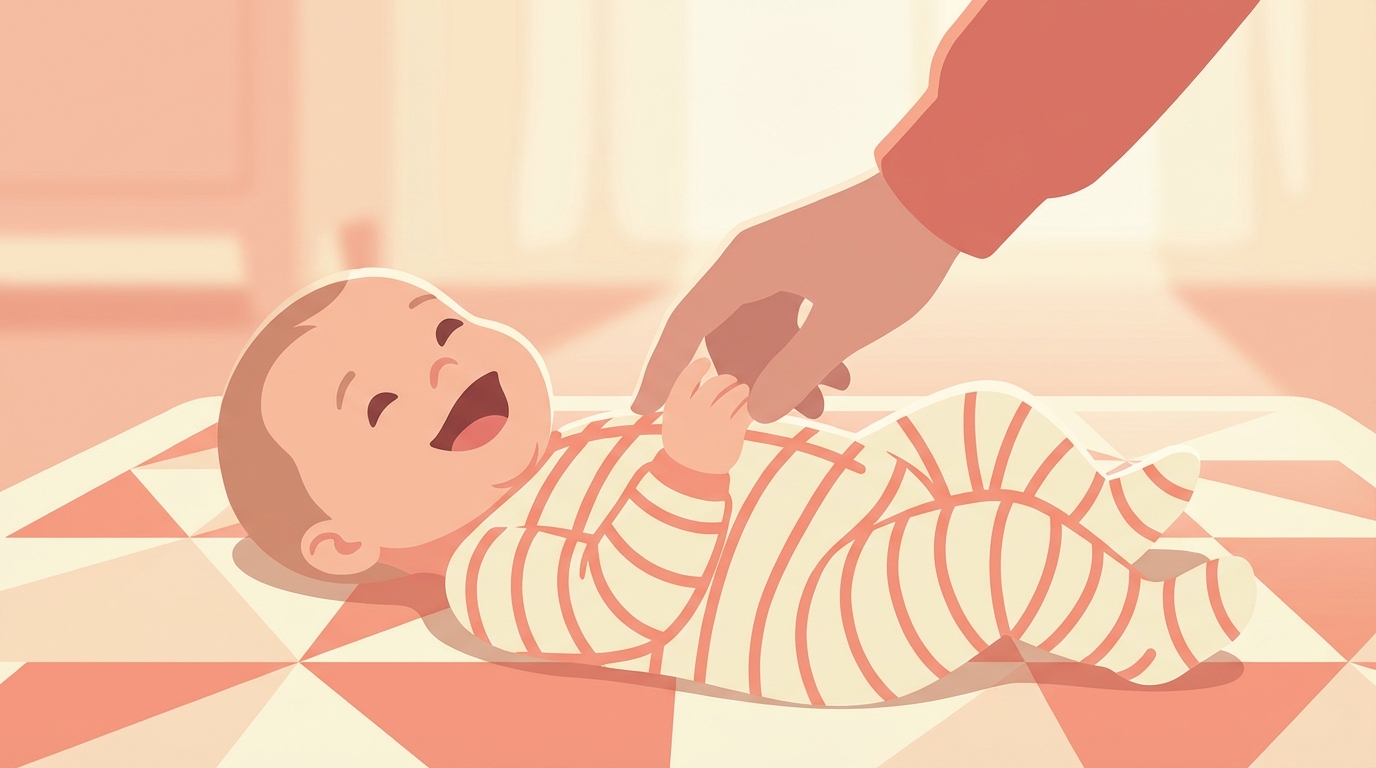
Some babies say their first word at 9 months. Some don't say one until 15 or 16 months. Both can be completely fine.
The part that matters more than specific words is whether your baby is communicating. Speech-language pathologists focus on the full picture: Are they making eye contact? Pointing at things? Responding to their name? Playing back-and-forth games like peekaboo? Babbling with a variety of sounds, not just one? A baby who does all of those things but hasn't said "mama" yet at 13 months is probably fine. A baby who isn't doing any of those things at 10 months deserves a closer look, even if they've said a word or two.
The CDC's developmental milestones page is the most reliable free checklist for this. It's based on data from actual pediatric studies, not parenting blog opinions.
When to bring it up with your pediatrician
There's no single red flag, but here are the benchmarks that speech-language pathologists and pediatricians actually use. These benchmarks are for full-term babies. Use adjusted age for premature babies.
- By 12 months: Your baby should be babbling with a mix of consonants, responding to their name, and understanding simple requests like "give me that"
- By 15 months: At least one clear word used intentionally. If not, worth mentioning at the next visit
- By 18 months: Using several words consistently. The AAP looks for whether your child is trying to say words and using gestures like pointing and waving
- By 24 months: 50+ words and starting to combine two words. If your toddler has fewer than 50 words by age 2, the AAP considers that a reason for a speech-language evaluation
The term you'll hear is "late talker." About 10-15% of 2-year-olds fall into this category, according to a literature review on late language emergence. Many late talkers do catch up on their own by age 3-4, but some don't, and there's no reliable way to predict which group your kid falls into without professional assessment.
If you're worried, ask sooner rather than later. Early speech therapy is free or low-cost in most states through the Early Intervention program (for kids under 3), and there's no downside to getting evaluated. The worst case is they tell you everything looks fine and you stop worrying.
What actually helps language development
You don't need flash cards or "educational" baby shows. Research is pretty clear on what works.
The biggest one: talk to your baby. A lot. A 2018 study from MIT and Harvard (Romeo et al.), published in Psychological Science, found that what mattered most for language development wasn't the total number of words kids heard, but the number of conversational turns. The back-and-forth between parent and child. Responding to your baby's babbles as if they're real conversation (because they are trying) does more than narrating your grocery list at them.
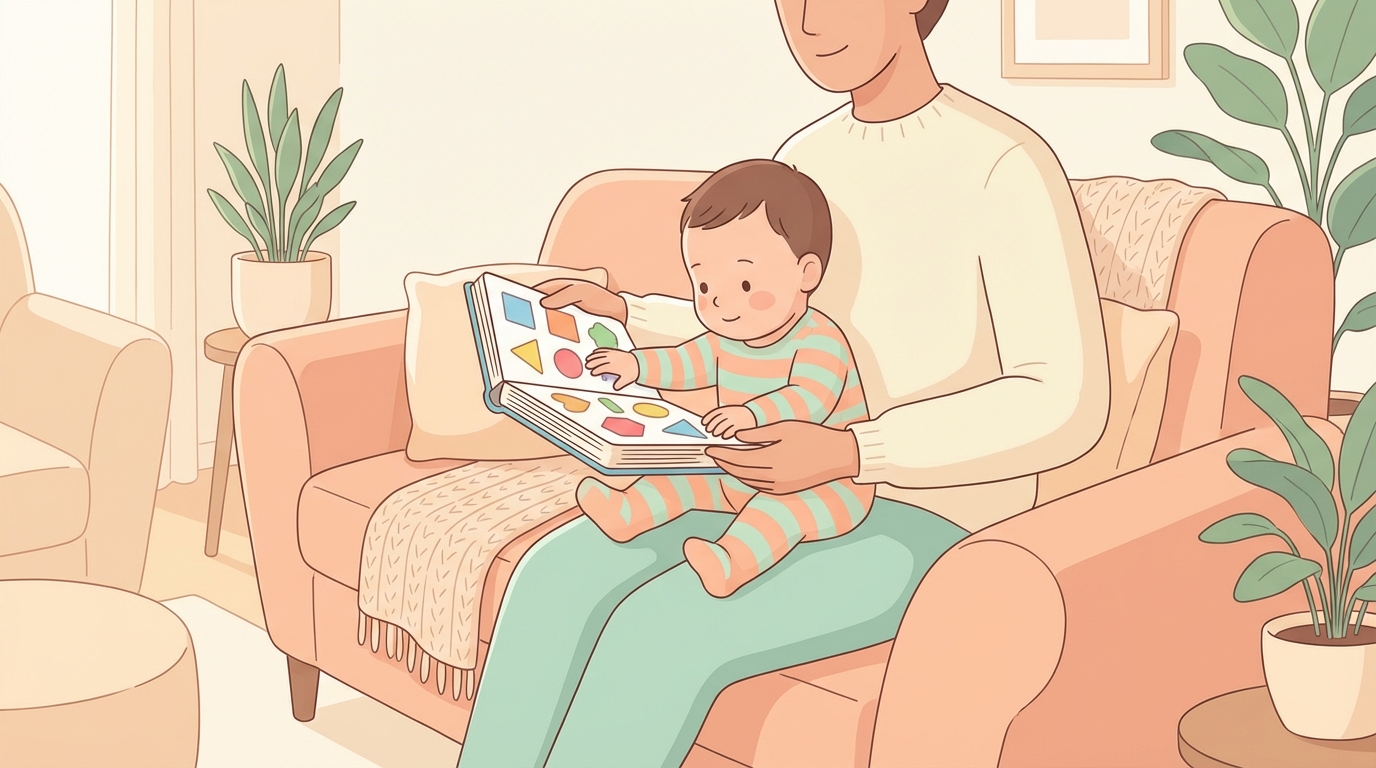
Reading to them helps too, not because they understand the plot of Goodnight Moon, but because books expose them to a wider range of sounds and sentence structures than normal conversation. Board books where you can point at pictures and name things are ideal in the first year.
When your toddler starts using words, expand instead of correcting. They say "dog," you say "yes, a big brown dog." They say "more," you say "more banana?" This models richer language without making them feel like they got it wrong.
One thing that doesn't help much: screens. The AAP recommends no screen media for children under 18 months except video chatting. Screens are one-directional. They talk at your baby, not with them, and conversational interaction is what actually builds language.
Bilingual babies
If you're raising your baby with two languages, you might notice they start talking a little later. This is normal and well-documented. Bilingual children sometimes have a smaller vocabulary in each individual language in the early years, but their total vocabulary across both languages is typically on par with monolingual peers, according to research published by the National Institutes of Health.
Don't let anyone tell you that speaking two languages is confusing your baby. The research doesn't support that. Speak whichever languages feel natural at home.
Tracking what they say
One thing that catches parents off guard is how fast the word explosion happens between 18 and 24 months. You go from counting words on one hand to losing track entirely. Writing down new words as they appear sounds like overkill until you realize you can't remember whether "truck" or "shoe" came first, and your kid now says both 50 times a day.
If you use Aanvi, the milestone tracker covers all the CDC language milestones, and you can log quotes and new words alongside photos and videos, which becomes genuinely useful when the pediatrician asks "how many words does she have?" at the 18-month visit and you blanked.
Common Questions
How many words should a 1-year-old say?
Most 12-month-olds have 1-3 words they use consistently, according to the AAP. By 18 months, they should have several words and be using gestures like pointing. The big vocabulary jump happens between 18-24 months, when word counts go from around 20 to 200+.
Do bilingual babies talk later?
Sometimes slightly, but it's normal and well-documented. Bilingual children may have a smaller vocabulary in each individual language early on, but their total vocabulary across both languages is typically on par with monolingual peers, per NIH research. Don't stop speaking your native language at home.
When should I get a speech evaluation?
If your toddler has fewer than 50 words by age 2 or isn't combining two words, the AAP considers that a reason for a speech-language evaluation. Early Intervention services are free or low-cost in most states for kids under 3, and there's no downside to getting checked.
Does screen time affect speech development?
Yes. The AAP recommends no screen media for children under 18 months (except video calls). Screens are one-directional: they talk at your baby, not with them. Research shows conversational back-and-forth between parent and child is what actually builds language skills.
Wondering if your baby is hitting their language milestones? The free milestone tracker has the full CDC checklist from birth through age 5.