

Most babies can sleep a 6-hour stretch by around 6 months, though many don't consistently sleep 8+ hours until 9-12 months or later. A 2018 study in Pediatrics found that 38% of 6-month-olds still weren't hitting 6 consecutive hours, so if yours isn't there yet, that's well within normal.
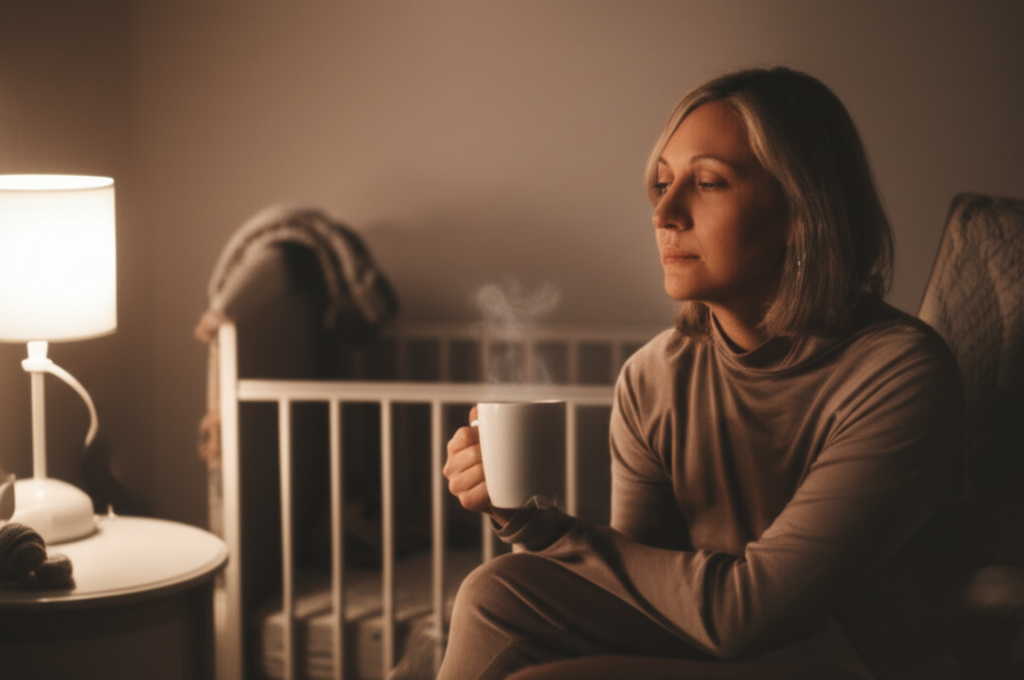
At 3am, holding a baby who was asleep 20 minutes ago, you will Google this question. Everyone does. The answer you want is "soon." The real answer is more complicated.
What "sleeping through the night" actually means
Most people hear "sleeping through the night" and picture a baby who goes down at 7pm and wakes at 7am. That's not what pediatric sleep researchers mean. In clinical studies, "sleeping through the night" is typically defined as a stretch of six consecutive hours. Some studies use as few as five, others use eight.
So when a friend tells you their three-month-old sleeps through the night, they might mean 11pm to 5am. That counts, technically. It just doesn't feel the way you imagined.
When it happens
There's no single age where babies collectively start sleeping long stretches. It's a gradual shift.
The first 8 weeks are survival mode. Newborns sleep 14-17 hours a day according to the National Sleep Foundation, but in chunks of 2-4 hours. Their stomachs are tiny, they need to eat frequently, and their circadian rhythm hasn't developed yet. They genuinely cannot tell the difference between day and night.
Around 3-4 months, things start shifting. Circadian rhythm kicks in. Your baby starts consolidating sleep into longer nighttime stretches, maybe 4-6 hours at a time. This is when many parents see the first glimmer of hope. It's also when the 4-month sleep regression hits, which can feel like a step backward even though it's actually a sign of brain development.
By 6 months, a significant number of babies can go 6-8 hours without a feed. But "significant number" still leaves a lot of babies who can't. More on that below.
Between 9-12 months, most babies are capable of sleeping 10-12 hours overnight with at most one brief waking. "Capable" is doing a lot of work in that sentence, though. Capable doesn't mean they will. Night wakings can persist for all kinds of reasons that have nothing to do with hunger: teething, developmental leaps, illness, or just wanting you.
The research vs. the parenting advice
Parenting culture creates the impression that sleeping through the night is a milestone your baby should hit by a certain age. The research tells a different story.
A large Canadian study published in Pediatrics in 2018 (Pennestri et al.) followed 369 infants and found that at 6 months, about 38% of babies still weren't sleeping 6 consecutive hours. At 12 months, 28% still weren't. The authors found no association between sleeping through the night and later cognitive or psychomotor development. In other words, the babies who woke up more didn't turn out any different from the ones who slept straight through.
That's worth sitting with. The pressure to "fix" a baby's sleep often comes from the assumption that night waking is a problem to solve. Sometimes it is. Sometimes it's just what babies do.
What actually affects the timeline
Some factors speed it up, some slow it down. None of them are in your control the way you'd like.
Feeding method matters, but not as much as people claim. Breastfed babies do tend to wake more often than formula-fed babies, partly because breast milk is digested faster. But the AAP's infant sleep guidance points out that the difference narrows significantly by 6 months. By a year, it's gone. Formula isn't a sleep hack.
Temperament is real. Some babies are just lighter sleepers. They startle awake more easily, take longer to self-soothe, and react more strongly to discomfort. This isn't something you caused, and it's not something a white noise machine will fully fix. It's just who they are right now.
Developmental leaps create temporary disruptions. Rolling, crawling, pulling to stand, talking. Every major motor or cognitive leap can disrupt sleep for a week or two. This is well-documented in sleep research and it's the main reason progress on sleep isn't linear.
Things that help (realistically)
There's a lot of noise about baby sleep. Some of it is evidence-based. Most of it is product marketing dressed up as advice.
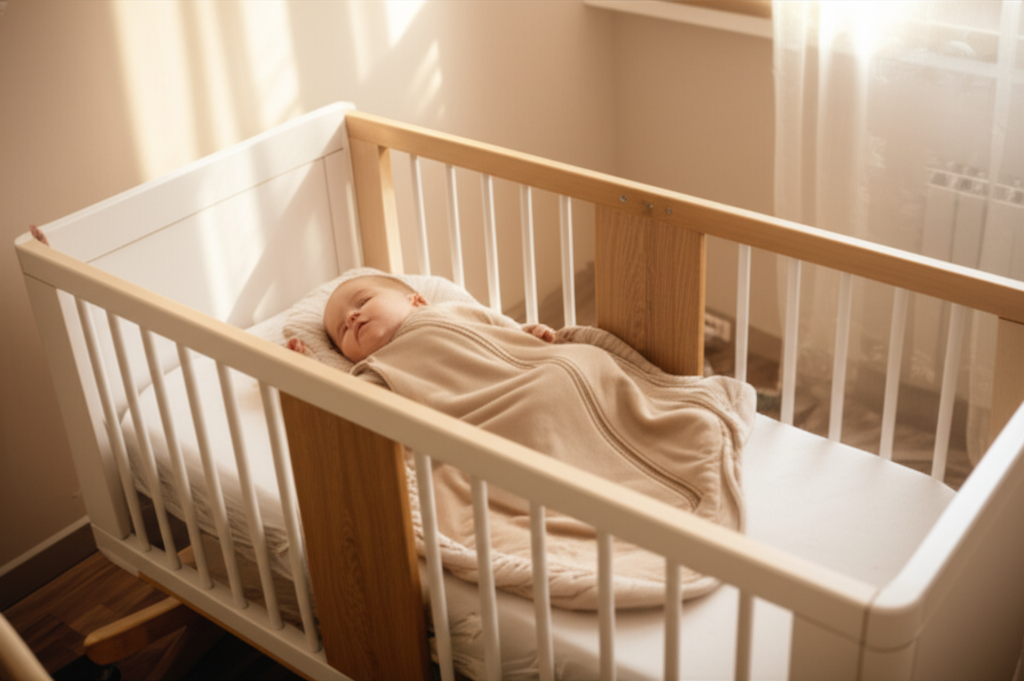
A consistent bedtime routine helps. Not because of any one element (bath, book, song), but because predictability signals to your baby's brain that sleep is coming. A 2009 study in the journal Sleep found that babies who had a consistent bedtime routine fell asleep faster and woke less often. The routine itself doesn't need to be elaborate. Same sequence, same time, most nights.
Dark room and white noise. These don't teach your baby to sleep, but they reduce disturbances. Blackout curtains and a white noise machine are two of the most cost-effective sleep investments.
Putting your baby down drowsy but awake. This is the single most repeated piece of pediatric sleep advice, and it's backed by research. The idea is that babies who fall asleep independently are better at connecting sleep cycles without needing you. Whether this works for your specific baby at this specific stage is another question. Many parents try it, it doesn't work, they feel like they failed. You didn't.
What doesn't help: comparing your baby to someone else's. Sleep Instagram is full of 10-week-olds sleeping 12 hours and that has very little to do with what's normal.
When to actually worry
Night waking on its own is not a medical concern. But a few things are worth mentioning to your pediatrician:
- Snoring or gasping during sleep (could indicate obstructive sleep apnea, which the AAP says affects about 1-5% of children)
- Sudden increase in night waking in an older baby (past 12 months) that doesn't resolve in 2 weeks
- Your baby seems very difficult to wake or excessively sleepy during the day
- You're so sleep-deprived that you're worried about your own ability to function safely
That last one matters. Parental sleep deprivation isn't just unpleasant. It affects driving, decision-making, and mental health. If you're at that point, talk to someone about it.
The part nobody says out loud
Some babies sleep through the night at 3 months. Some don't until well past their first birthday. Neither version means you did something wrong. The "good sleeper" label is mostly luck: temperament plus biology plus timing. The parents of a baby who sleeps 12 hours at 4 months aren't better parents. They just got a baby whose brain matured in that direction earlier.
This matters because the guilt and self-blame around baby sleep is enormous, and most of it is unnecessary. Do what you can, set up the conditions, and beyond that, time is the main ingredient.
If you're tracking patterns to share with your pediatrician, Aanvi lets you log sleep alongside other milestones, so you can show actual data instead of trying to remember whether last Tuesday was a good night or a bad one. The sleep calculator breaks down how much total sleep your baby needs by age if you want to check whether what's happening is within range.
Common Questions
Do formula-fed babies sleep through the night sooner?
Slightly, in the early months. Breast milk digests faster, so breastfed babies tend to wake more often. But the AAP notes the difference narrows significantly by 6 months and disappears by a year. Switching to formula for sleep alone isn't recommended.
Is sleep training safe?
The AAP doesn't endorse any specific sleep training method, but a 2016 study in Pediatrics found no long-term harmful effects from graduated extinction or bedtime fading. Sleep training is a personal decision. Discuss with your pediatrician which approach, if any, is right for your family and your baby's temperament.
Why does my baby wake up more during developmental milestones?
Every major motor or cognitive leap, like rolling, crawling, or pulling to stand, can temporarily disrupt sleep. Your baby's brain is processing new skills during sleep, causing more frequent wakings. This is normal and usually resolves within 1-2 weeks.
When should I worry about my baby's night waking?
Night waking alone isn't a medical concern. See your pediatrician if your baby snores or gasps during sleep, seems excessively sleepy during the day, or if an older baby (12+ months) has a sudden increase in wakings that doesn't resolve within two weeks.