
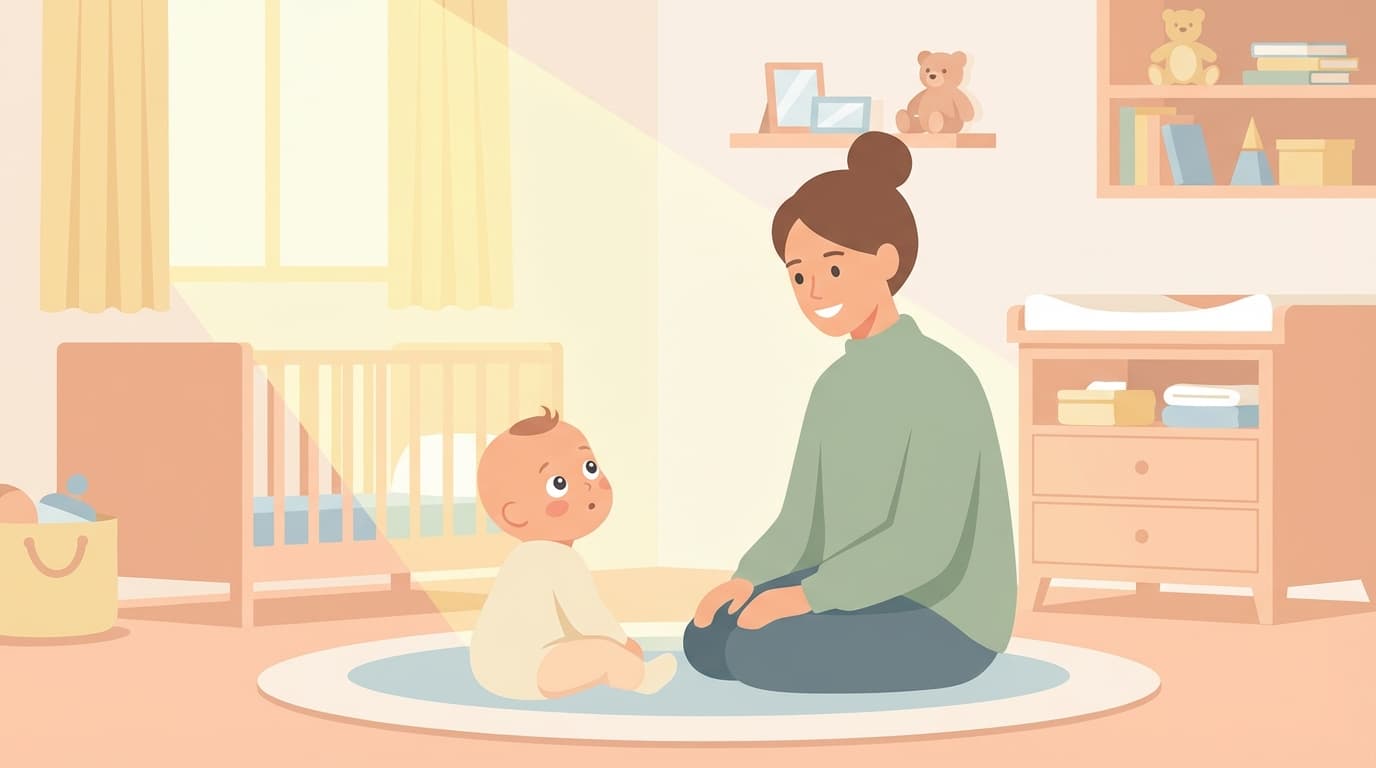
You say your baby's name. They turn and look at you. It feels like a bigger deal than it should. Out of all the sounds flying around in a room, they pulled out the one that belongs to them. But when does that happen, and how do you know it's real recognition and not just a response to your voice?
The Short Answer
Most babies start showing signs of name recognition between 5 and 7 months. By 9 months, the majority will consistently turn when you say their name in a normal conversational tone.
But "recognition" is doing a lot of heavy lifting in that sentence. There's a gap between a baby noticing a familiar sound and understanding "that word is me."
What's Going On in Their Head
A 1995 study from Mandel, Jusczyk, and Pisoni found that babies as young as 4.5 months could distinguish the sound pattern of their own name from other names. The researchers used a head-turn preference procedure and found that infants listened longer when they heard their own name compared to other names with similar or different stress patterns.
That doesn't mean a 4.5-month-old knows their name the way you or I do. They recognize a sound pattern they've heard thousands of times. It's more like how you might perk up hearing your ringtone in a crowded cafe, except they haven't figured out what happens next.
Between 5 and 7 months, something shifts. The name starts functioning as a signal. They hear it and orient toward you. Not every time, and not if something more interesting is happening, but often enough that it feels intentional.
By 9 months, most babies will turn toward their name reliably, even when said by someone other than a parent. That's the real milestone: responding to the word itself, not just a familiar voice.
What It Looks Like Stage by Stage
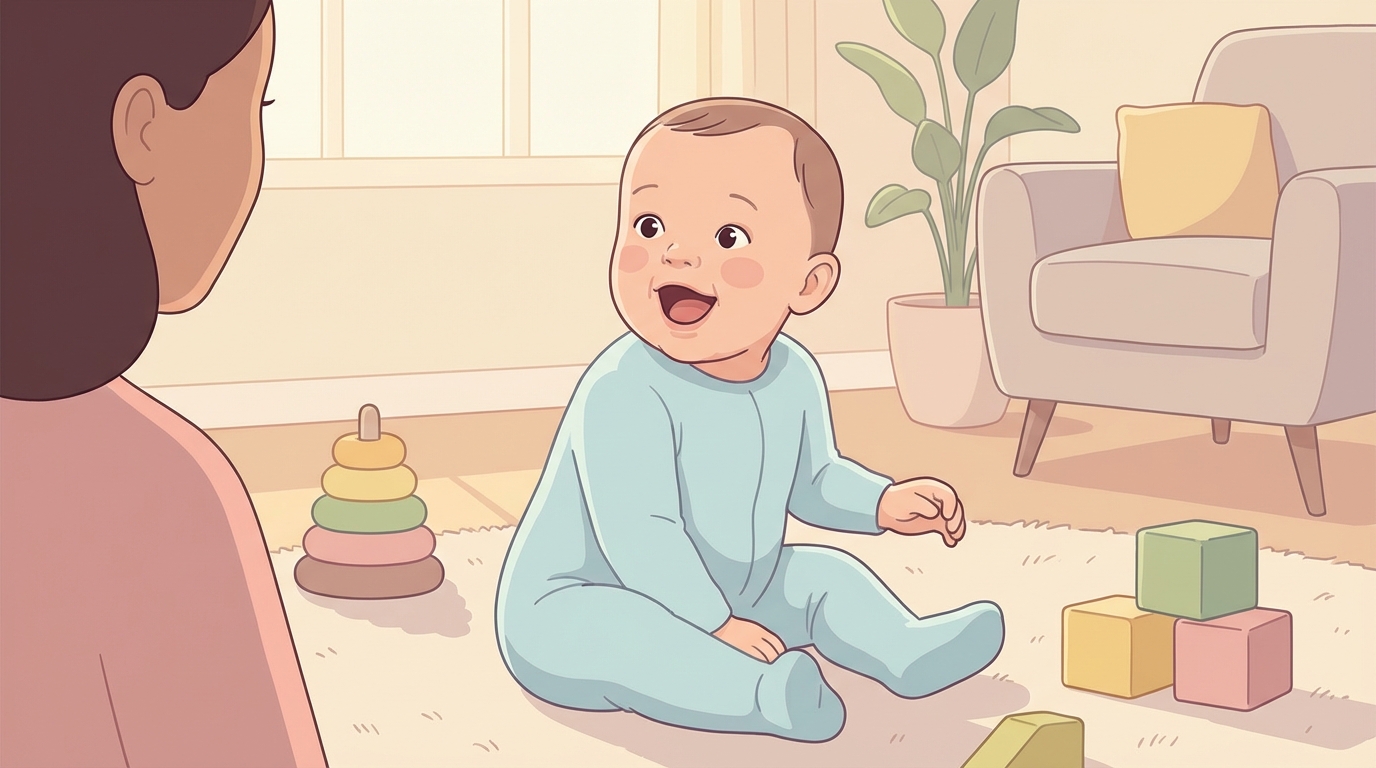
3 to 4 months: They might quiet down or briefly pause when you say their name. It's subtle. You'd probably miss it if you weren't looking for it.
5 to 7 months: Head turns. Eye contact after hearing their name. They might smile or kick their legs. This is when most parents first notice it. You say "Lila" across the room and she whips around. You spend the next ten minutes doing it over and over while your partner films.
8 to 12 months: Consistent, reliable responses. They'll look up from a toy, turn away from something interesting, or crawl toward you when they hear their name. They're also starting to understand that other people have names too.
If You Speak More Than One Language at Home
There's a persistent myth that bilingual babies hit language milestones later. A large-scale study published in the Journal of Child Language (comparing 302 bilingual children to 302 monolingual children) found no meaningful difference in the age at which they hit early milestones, including babbling, first words, and word comprehension.
Name recognition specifically shouldn't be delayed. Your baby hears their name in both languages, from both sets of speakers, so they're getting plenty of repetition. One thing to keep in mind: if different family members use different forms of the name (say, "Sofia" in English and a shortened form in another language), it might take a tiny bit longer for the baby to connect both versions. But they will. Use their name naturally in whichever language you're speaking and don't worry about it.
When It's Worth Mentioning to Your Pediatrician
Not responding to their name by itself doesn't diagnose anything. Babies ignore you for all kinds of reasons: they're focused on something, the room is loud, they're overtired, or they've decided that pulling the dog's tail is more important than whatever you want.
That said, the CDC includes "responds to own name" as a milestone by 9 months. If your baby consistently doesn't respond to their name by 12 months, even in a quiet room with no distractions, bring it up at your next well-child visit.
A prospective study published in The Journal of Pediatrics found that infants who were later diagnosed with ASD showed reduced response to their name starting as early as 9 months, with a 35% failure rate at 12 months compared to 14-16% in other groups. The key word is "associated." Plenty of babies who are slow to respond to their name are just slow to respond to their name. But it's the kind of thing your pediatrician should know about so they can look at the full picture.
Don't spiral into Google at 2am over this. Do mention it at your next appointment.
Helping It Along
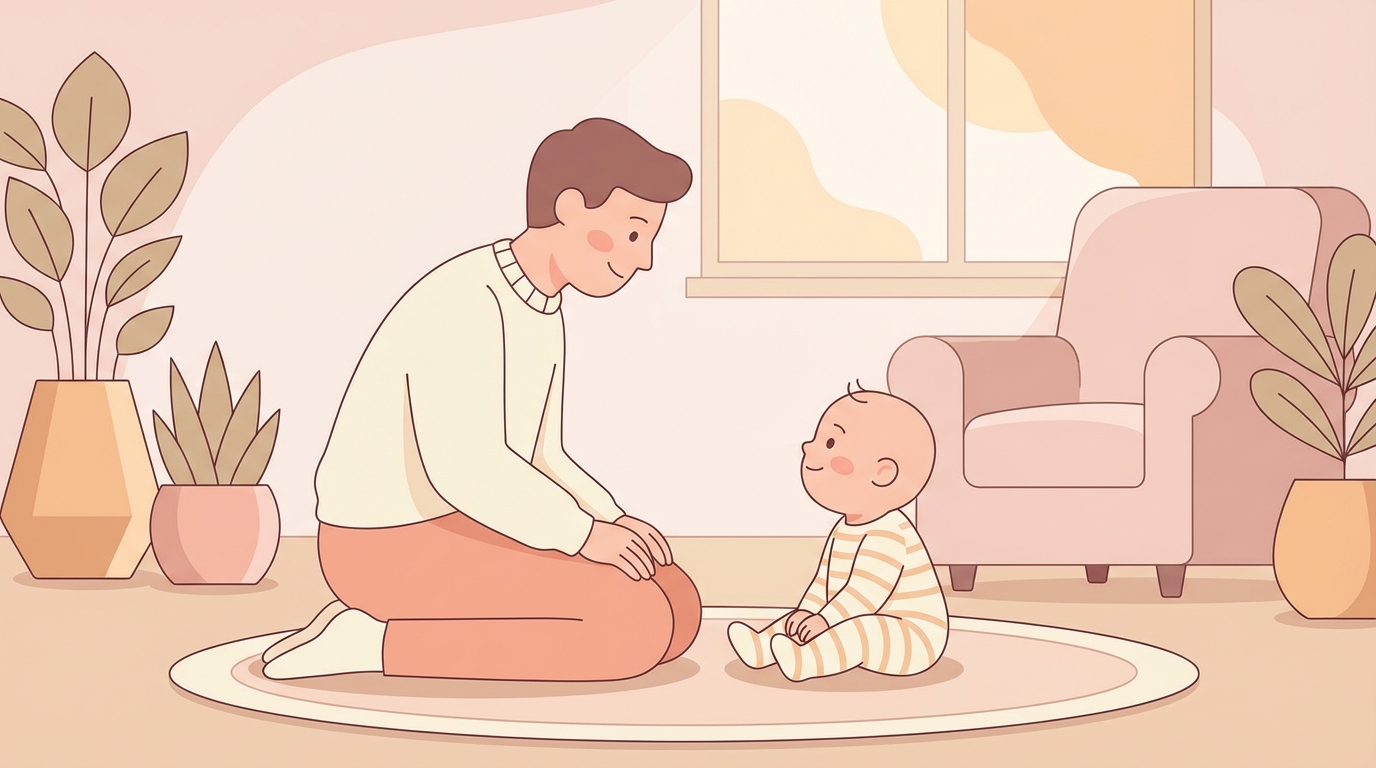
You don't need a curriculum. You just need to use their name a lot, which you're probably already doing.
A few things that make a difference:
- Use their actual name, not just "baby" or "sweetie." Nicknames are fine sometimes, but the more they hear the real thing, the faster it clicks.
- Say their name before talking to them, not during. "Maya. Look at the bird." Not "Look at the bird, Maya." Leading with the name grabs attention first.
- Get close. Shouting from across the house doesn't count for a 5-month-old. Be within a few feet, at their level.
- Don't test them constantly. If you spend the whole afternoon saying their name to see if they respond, they'll tune it out. Babies are smarter about selective attention than we give them credit for.
This is the kind of milestone that sneaks up on you. One week they're ignoring you, and three weeks later they're spinning around every time you say their name from across the room. If you're using Aanvi to track milestones, name recognition falls under the social/cognitive category, and it's worth logging the first time you're sure it wasn't a coincidence. The Baby Milestone Tracker shows the other social and language milestones to expect around the same age.
Name recognition isn't flashy. There's no dramatic first-step moment, no video that gets a hundred likes. But it's one of the first signs that your baby understands they're a separate person in the world, with a word that belongs only to them.
Want to keep track of when these milestones happen? Aanvi is a free app with CDC-based milestone tracking. Log the moment it clicks, share it with family, and look back on it later when they're two and ignoring you on purpose.