

Nobody's first trip with a baby goes the way they planned it. Not because something goes wrong, necessarily, but because you packed for every scenario, spent three hours loading the car, and then your baby fell asleep five minutes in and the whole production felt absurd.
Or they screamed the entire flight. That also happens.
The gap between what you prepare for and what actually matters is enormous when it comes to baby travel. The packing list isn't the hard part. The hard part is knowing what to stress about and what to let go.
When to take the first trip
There's no rule. Newborns can fly as early as 7 days old per most airline policies, though you should talk to your pediatrician about when it's safe to fly with your specific baby, since many recommend waiting until after the first round of vaccinations. The AAP notes that babies don't have fully developed immune systems and crowded airports are germ factories, so the timing question isn't about regulations. It's about risk tolerance.
For road trips, there's no minimum age. You can drive a newborn home from the hospital, obviously. The constraint is the car seat: the AAP's child passenger safety guidance recommends stopping every 2 hours to take the baby out of the seat, since prolonged time in a semi-upright position can affect breathing in very young infants.
Most families take their first real trip somewhere between 3 and 6 months. Early enough that the baby isn't mobile and getting into everything, late enough that you've figured out the feeding and sleep basics. But plenty of parents fly internationally at 8 weeks out of necessity and the baby is fine.
Flying vs. driving
This is the first decision and it's worth thinking about honestly.
Flying gets you there faster, which matters if you're crossing the country. But it comes with constraints: you're locked in a metal tube with strangers, you can't pull over, and your baby's opinion about cabin pressure changes will be loudly shared with everyone in rows 15 through 30.
Babies under 2 can fly on a parent's lap for free on domestic flights. International carriers typically charge a reduced infant fare. But the FAA recommends buying the baby a seat and using an FAA-approved car seat on the plane. It's safer during turbulence and gives you your arms back. Whether the cost of an extra ticket is worth it depends on the flight length. Two hours? Probably fine on your lap. Five hours? You'll wish you bought the seat.
Driving gives you total control. You stop when you want, pack as much as the trunk holds, and if the baby loses it you pull into a gas station parking lot and regroup. The downside is time. An 8-hour drive becomes 10-11 hours with a baby because of feeding stops, diaper changes, and the sacred rule: never wake a sleeping baby in a car seat just because you arrived at a rest stop.
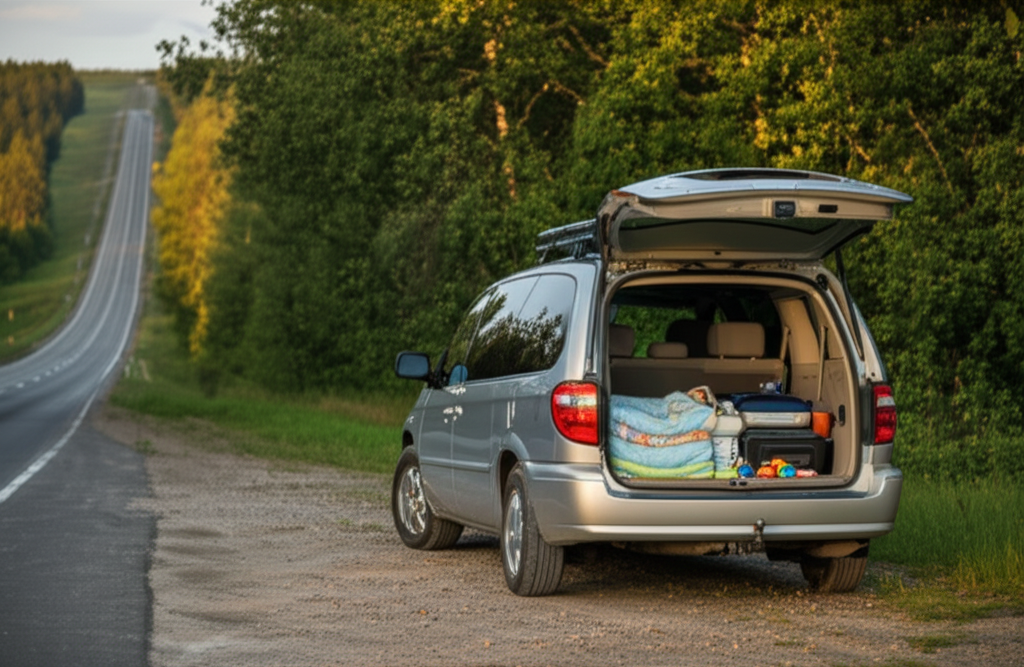
For trips under 6 hours, driving is almost always easier with a baby. Over 6 hours, flying starts to win despite the hassle, because 3 bad hours on a plane beats 11 mediocre hours on a highway.
The car seat situation
You need a car seat at your destination unless you're exclusively using taxis (which is its own gamble). That means either:
- Bringing your own. Most U.S. airlines let you gate-check car seats and strollers for free. It arrives at the jet bridge when you land. Downside: you're hauling it through the airport.
- Renting one. Car rental companies typically offer them for around $10-$15 per day, though quality and cleanliness vary wildly. Some parents are fine with this. Others take one look at the rental seat and wish they'd brought their own.
- Shipping it ahead. Services like Luggage Free will ship your car seat to your hotel. Expensive, but if you're already shipping luggage it can make sense.
If you're driving, this is a non-issue. The seat stays in the car. The Car Seat Safety Checker can help you confirm your seat is installed right and hasn't been recalled, which is worth doing before any long trip.
What to pack (the short version)
Every travel packing list for babies is 40+ items long. Here's what actually matters:
Diapers and wipes. Bring more than you think. Then bring five more. Running out of diapers in a rental cabin at 11pm is a specific kind of misery.
A change of clothes for the baby AND for you. The second part is what most lists miss. A blowout on a plane doesn't just get on the baby. Pack a full change of clothes for yourself in your carry-on. Ask anyone who's flown 4 hours in a spit-up covered shirt.
Whatever feeding situation you have. Formula, bottles, breast pump, nursing cover, whatever your setup is. TSA allows breast milk, formula, and baby food in quantities larger than 3.4oz through security. You don't need to fit them in a quart bag. Tell the agent at the checkpoint and they'll screen it separately.
One comfort item. The blanket, the specific pacifier, the stuffed animal they sleep with. Not a bag of toys. One thing.
Sound machine app on your phone. Hotel rooms sound nothing like home. White noise helps.
That's the core. Everything else is nice-to-have. You can buy diapers, baby food, and Tylenol at a Walgreens in almost any city on earth.
The ears thing on planes
Babies can't equalize ear pressure by swallowing on command. During takeoff and landing, the cabin pressure changes can hurt. What usually helps: have the baby swallowing. Nurse, give a bottle, or offer a pacifier during ascent and descent. This is the single most useful piece of flying-with-a-baby advice and it works the vast majority of the time.
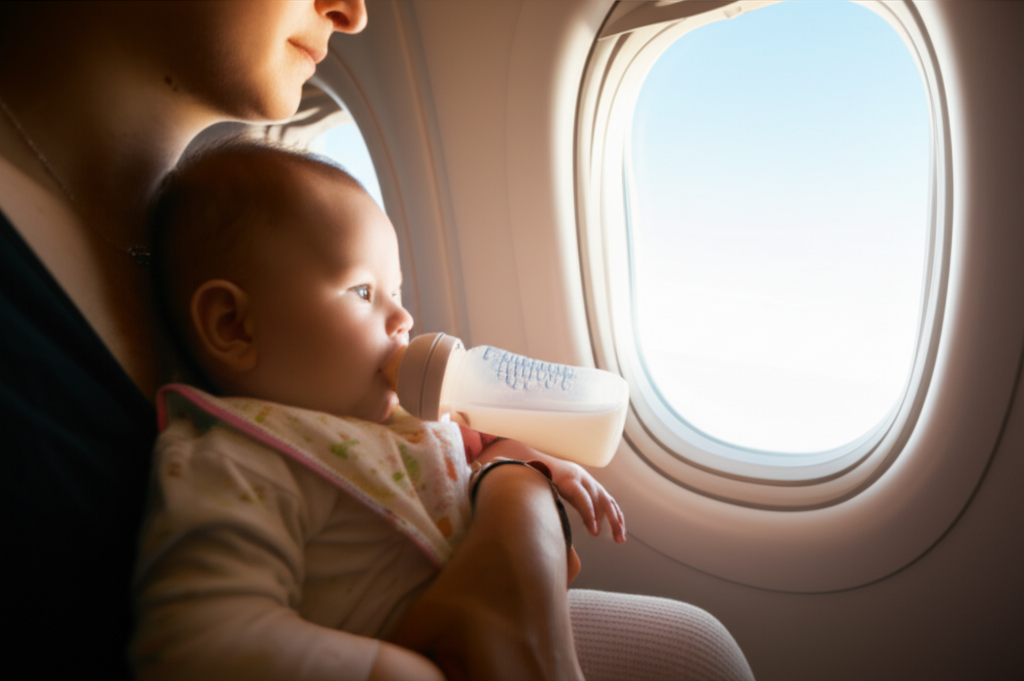
If your baby has a cold or ear infection, consider postponing the flight if possible. Congestion makes pressure equalization harder and a baby with ear pain at 30,000 feet is bad for everyone involved.
Hotels vs. rentals vs. family
Hotels give you housekeeping and usually a crib (request one in advance; they run out). The downsides: thin walls, no kitchen, and the baby's "room" is your room, so when they go to sleep at 7pm you're sitting in the dark scrolling your phone.
Vacation rentals give you a kitchen, separate bedrooms, and a washer/dryer that you will use more than you expect. The downside: no crib unless you bring a travel one or the listing includes one. Always confirm.
Staying with family is free and comes with built-in babysitters. It also comes with opinions about how you're feeding, sleeping, and parenting. Your call.
Sleep on the road
This is the part that wrecks people. Your baby had a solid routine at home. Asleep by 7, up at 6:30, naps at 10 and 2. Then you travel and the routine detonates.
Some strategies that help: bring the sleep sack, bring the sound machine, try to keep the same bedtime. Some parents darken the hotel room with garbage bags and painter's tape over the windows. It looks insane and it works.
But also, accept that sleep on vacation with a baby is going to be worse than at home. The first night is almost always terrible. It usually improves by night two or three. Planning a one-night trip is the worst of both worlds because you get the bad night without the recovery.
What nobody tells you
The trip is going to feel like it wasn't worth the effort at multiple points. Especially the first one. You'll be exhausted, you'll wonder why you didn't just stay home, and then your baby will see the ocean for the first time and get sand between their toes and make that face, and you'll understand.
Travel with a baby isn't the same as travel before a baby. It's slower, heavier, and requires more planning. But babies are remarkably portable if you keep expectations reasonable and logistics simple.
Your baby won't remember the trip. You will. If you want to actually remember it and not lose the photos in your camera roll, Aanvi lets you tag trip photos and milestones together on a timeline so "first beach trip" doesn't get buried in 400 unorganized vacation photos.
Quick reference by age
0-3 months: Easiest in some ways. They sleep a lot, can't crawl away from you, and don't need entertainment. Hardest in some ways: frequent feeding, fragile routine, and you're still recovering from having a baby.
4-8 months: The sweet spot for many families. Alert and fun, not yet mobile, usually on some kind of eating schedule. Sitting up in a high chair at restaurants is a whole new world.
9-12 months: They crawl. They cruise. They put everything in their mouth. Hotel rooms become obstacle courses. You'll spend more energy chasing them than sightseeing, but they're at the age where new experiences visibly excite them, which is worth something.
One last thing: if you're flying with the car seat, check that it's FAA-approved before you get to the gate. Not all of them are. The Car Seat Safety Checker can verify that, plus catch any recalls.