
The real problem isn't distance
The obvious version of this post would be about long-distance grandparents. And sure, that's part of it. But plenty of parents who live twenty minutes from the grandparents still struggle to keep them updated. The problem isn't geography. It's bandwidth.
You took forty photos today. Your mom wants to see them. She also wants context. When was this? What's that food? Is that a new tooth? You're running on four hours of sleep and the idea of putting together a photo update for anyone makes you want to throw your phone in the sink.
So you don't send anything. Or you send one blurry photo with no caption. And Grandma calls to ask why she hasn't seen the baby lately.
This post is about making the sharing part automatic enough that it actually happens.
What grandparents actually want
Parents overthink this.
Grandparents want regular photos, milestone updates ("she rolled over today", "he said dada"), the occasional video of laughing or babbling, and to feel included rather than like they're begging for scraps.
They do NOT care about professional-quality images, themed photo albums, or your elaborate monthly milestone photoshoot with the letter board. The grandparent who complains they never see photos is not asking for a production. They want to see what the baby did this week.
Shared albums
The simplest option: a shared photo album that both parents can add to.
Google Photos and Apple Photos both support this. Create one, invite the grandparents, dump photos in whenever. No captions needed. Just the raw feed. Zero effort once it's set up.
The trade-off is context. Grandma sees forty photos and doesn't know which one is the first time she tried avocado versus a random Tuesday. And if your parents aren't comfortable with tech, getting the shared album set up on their end might take a whole afternoon of phone support.
Group chats
A lot of families default to the family WhatsApp group. Drop photos and updates in as they happen.
This works better than albums because you naturally add context. "Look at this face when she tried lemon" is more meaningful than a photo sitting alone in a folder. The downside: it requires active effort every time. And if both sets of grandparents are in the same group, it can get political when one side is more responsive than the other. Some families create separate groups for each set. More effort, less drama.
Digital frames
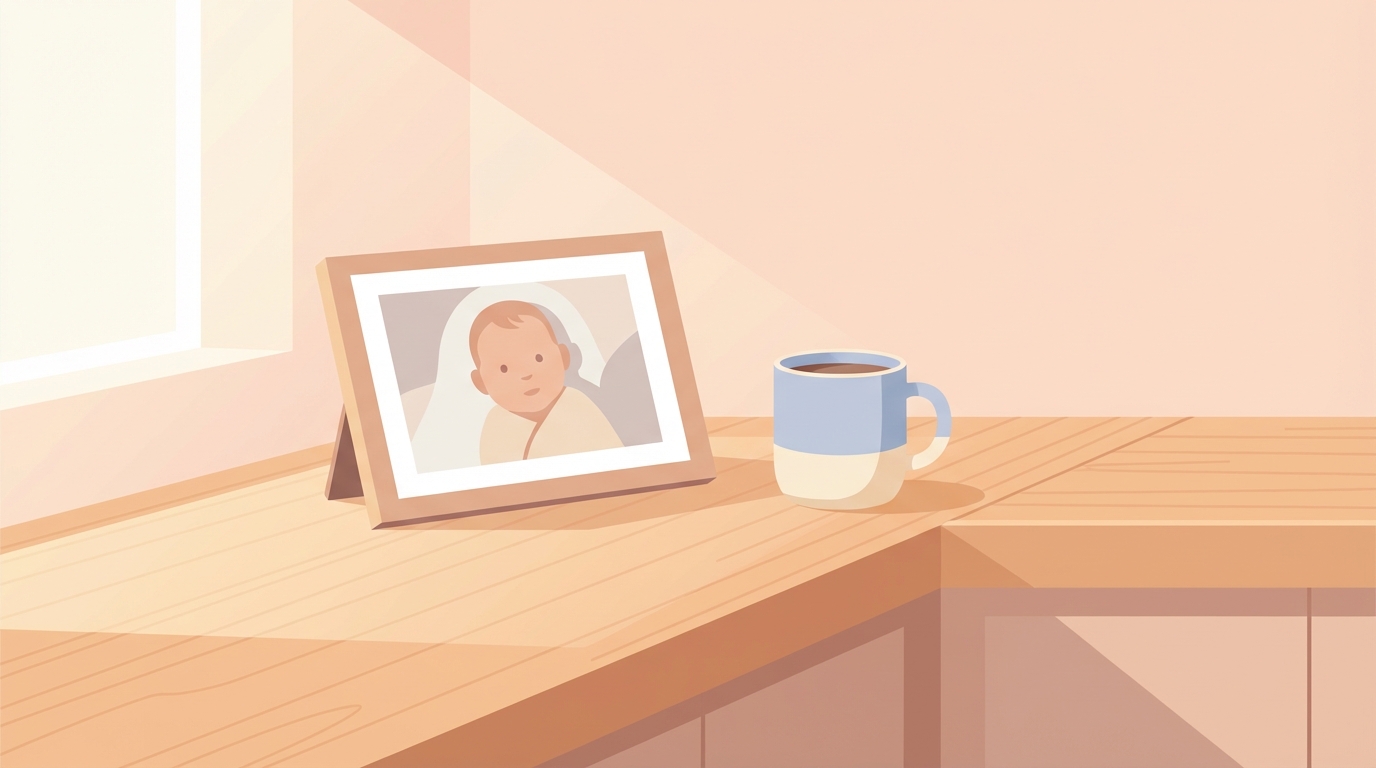
Digital frames that sync to a shared album (Aura, Nixplay, Skylight) sit on the grandparent's counter and rotate through new photos automatically.
You add photos from your phone. The frame updates. They don't need to open an app or check anything. They look at the counter while making coffee and there's a new photo of the baby. For grandparents who aren't great with phones, this removes every barrier.
Milestones are different from photos
"She crawled today" is the kind of thing that deserves its own message, not just a photo buried in a dump of twenty.
For the big ones, call. First steps, first words, first birthday. These are phone-call moments. Even if you missed filming the actual first step (you will), the phone call lets grandparents be part of it in real time.
The medium ones work fine as texts. First time sitting up, first solid food, waving bye-bye. A photo with a one-line caption.
The small ones can accumulate. The baby figured out how to take off their socks. She makes a specific noise when she sees the dog. He holds his own bottle now. These don't need individual updates. A weekly roundup or a shared timeline that grandparents can check covers these better.
For long-distance grandparents
Everything above applies, plus a few things that matter more when visits are rare.
Scheduled video calls build recognition. Babies start recognizing faces on screens earlier than you'd expect. A weekly FaceTime at the same time becomes a pattern the baby anticipates.

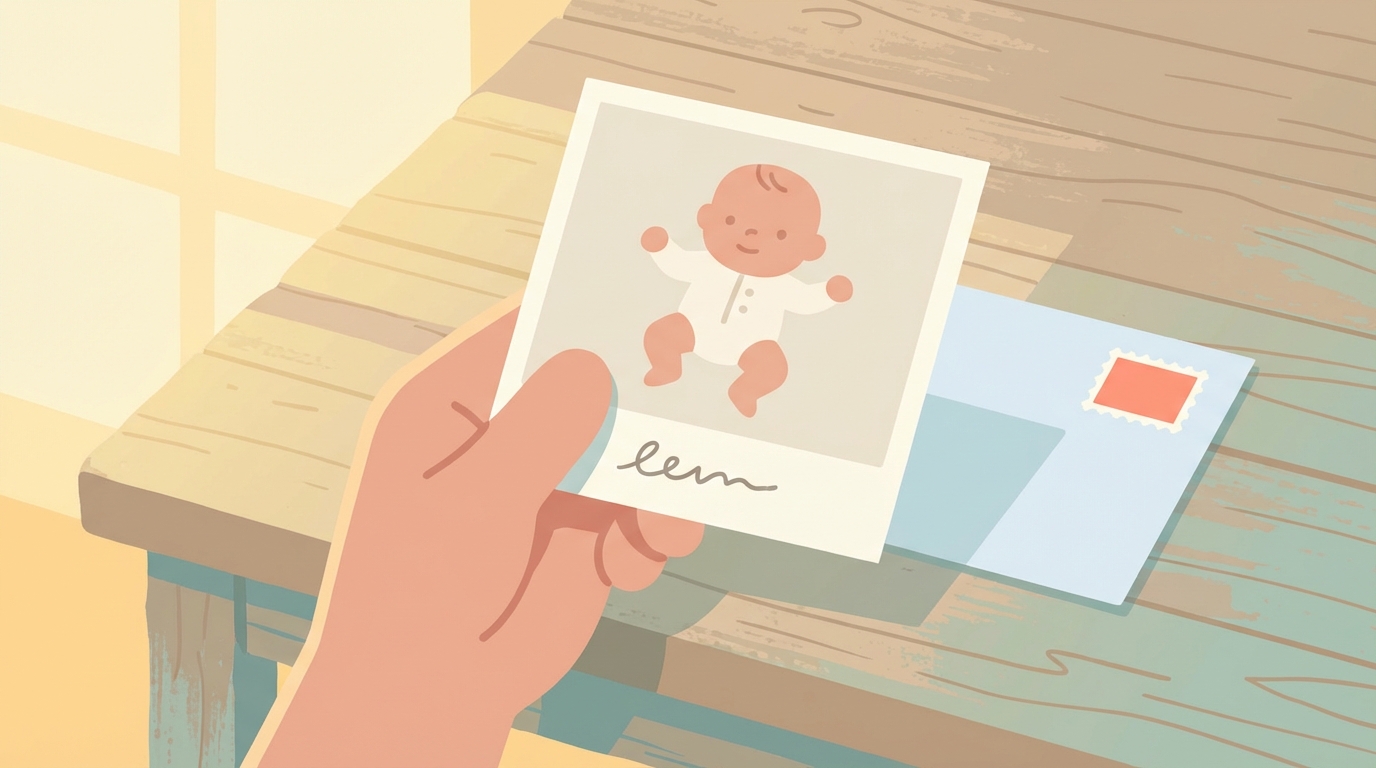
Send a printed photo in the mail once in a while. Most people don't print photos anymore, which is exactly why a printed one with a note on the back means something different than a text message.
Record voice messages. The baby babbling, the weird sound they make when they see a ceiling fan, the first attempt at a word. A 10-second audio clip captures something photos don't. Send it over WhatsApp. It'll get played six times.
Don't make them ask
If grandparents are always the ones reaching out for updates, they start feeling like a bother. Set up something that pushes updates to them rather than making them pull.
Don't gatekeep milestones either. If the other parent shares something with their parents first, it doesn't matter. The baby rolled over. Everyone should know.
And if the baby is taking their first steps toward grandma, put the phone down.
Making it last
If sharing baby updates is another item on your overwhelmed-parent to-do list, it stops happening within a month.
Apps like Aanvi help because they put photo timeline, milestone tracking, and family sharing in one place. Grandparents get invited and see updates as you add them. No separate group chats for different sides of the family, no shared albums that need manual setup.
Whatever you use, the point is the same: the less effort it takes to go from "that was cute" to "grandma saw it too", the more likely it actually happens.
Fun grandparent activity: plug in both parents' eye colors and run the Eye Color Predictor. Grandma will have opinions.