
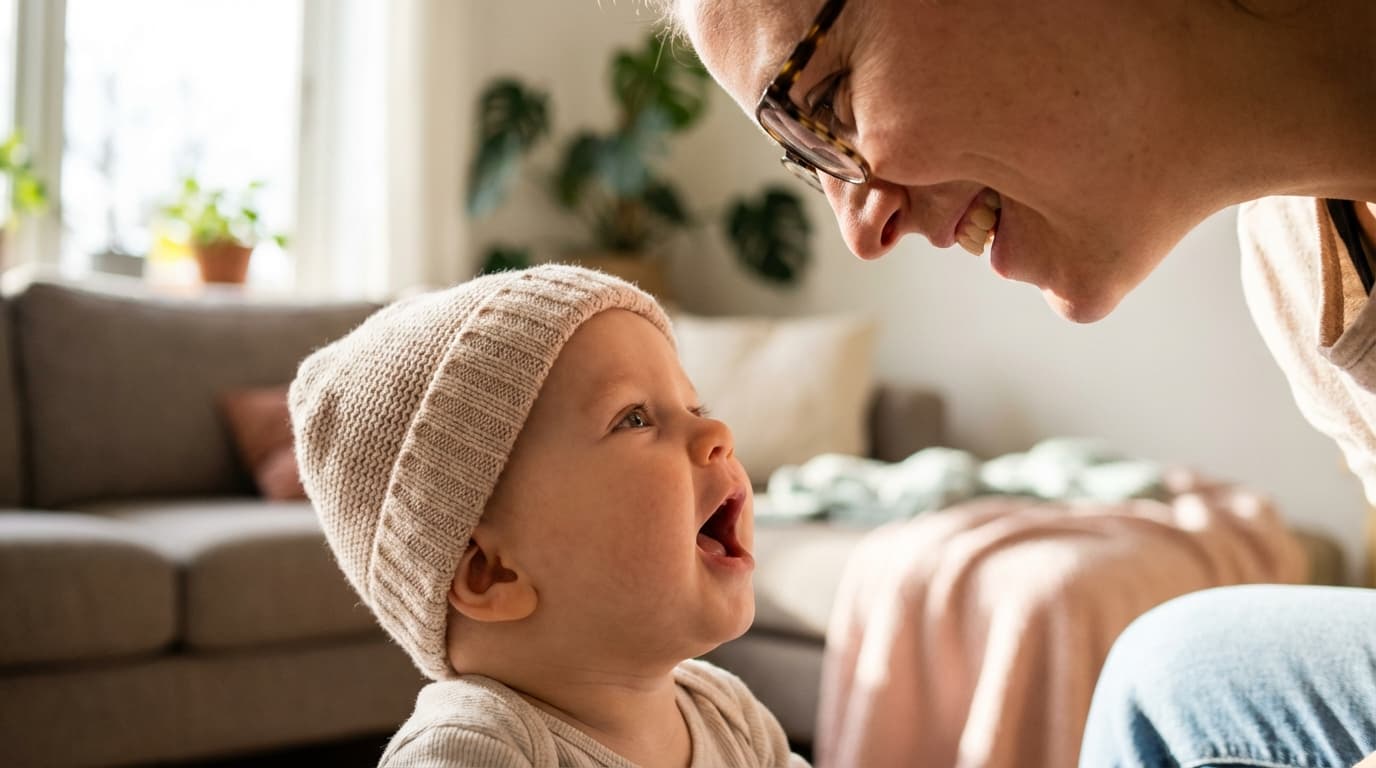
There's a moment around 10-12 months where your baby says something and you freeze. Was that a word? Did they just say "mama"? Or was it babble that happened to sound like a word because you've been awake since 4 AM?
It's hard to know. And honestly, the line between babbling and a first word is blurrier than anyone tells you.
What Counts as a First Word
This is where most parents get confused. A first word doesn't have to be a perfectly pronounced dictionary entry. According to the American Speech-Language-Hearing Association (ASHA), speech-language pathologists count a vocalization as a word when it meets two criteria:
- Your baby uses the same sound consistently for the same thing
- They use it intentionally, not just randomly
So "ba" counts as a word for "bottle" if your baby says "ba" every time they see or want a bottle. "Nana" counts for banana. "Dah" counts for dog if they point at the dog and say it. These are called word approximations, and they absolutely count.
What doesn't count: random babbling that happens to sound like "mama" at 6 months. If they're saying "mamamamama" while staring at the ceiling, that's vocal play. If they reach for you and say "mama," that's a word.
The Most Common First Words
Across almost every language studied, the first words babies say are some variation of "mama" and "dada." This isn't because babies love their parents the most (though sure, that too). It's because the consonant sounds M, D, B, and P are among the first sounds babies can produce. They're bilabial consonants, made by pressing the lips together, which babies can see you doing and imitate.
The Stanford WordBank, a database of children's vocabulary development across languages, shows a consistent pattern in early word acquisition. After mama/dada, the next most common early words tend to be:
- "No" (they learn this one fast)
- "Uh-oh" (partly because adults say it constantly around babies)
- "Ball"
- "Dog" / "cat" (or whatever animal lives in your house)
- "More"
- "Bye-bye"
- "Hi"
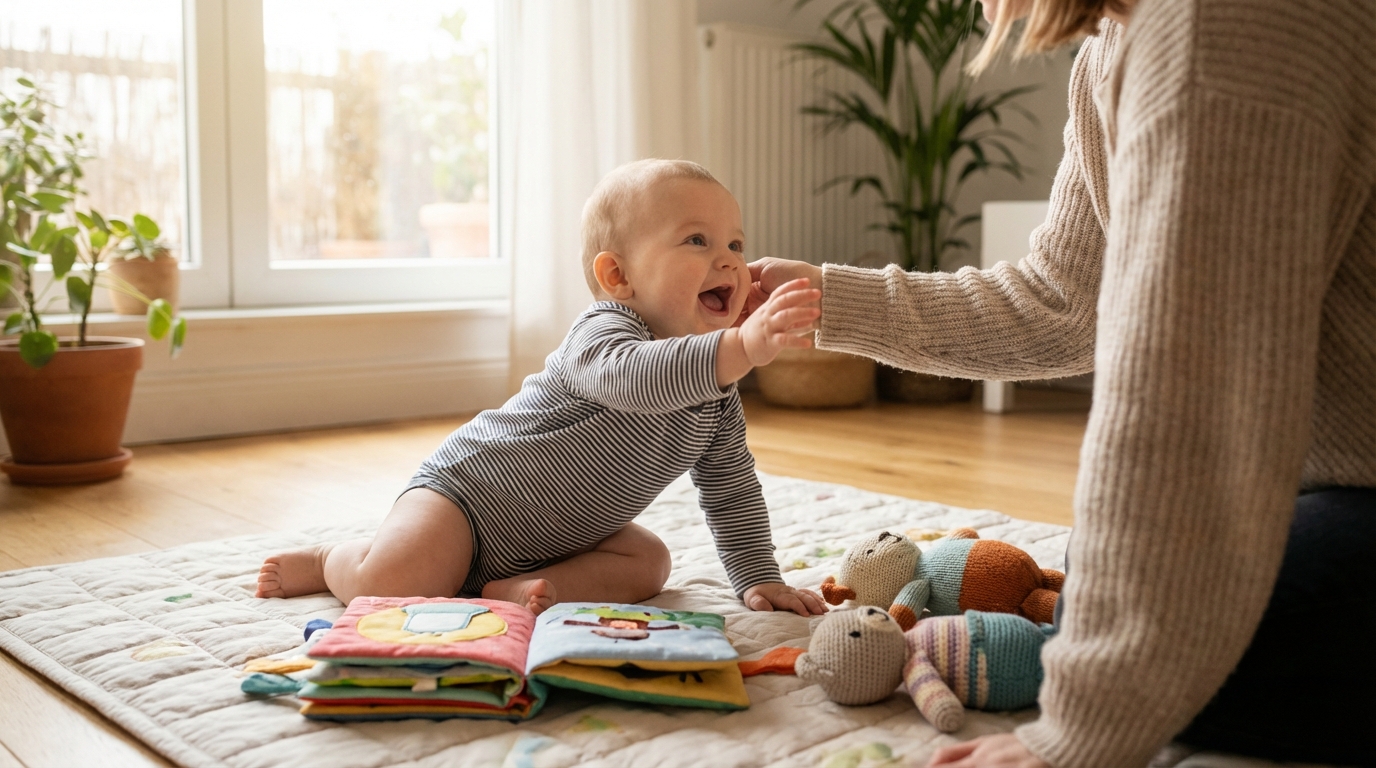
The animal thing is interesting. If you have a dog, "dog" or something close to it will probably show up before most other nouns. Babies name the things they see every day and care about. Pets rank high.
When to Expect First Words
The CDC milestone checklist lists "says one or two words" as a 12-month milestone and "says several words" as an 18-month milestone.
But the range is wide. Some babies say a recognizable word at 9 months. Others don't until 15 or 16 months and still develop language normally after that. The timeline is a guide, not a countdown.
What matters more than the exact month: is your baby communicating? Even before words, babies communicate through pointing, waving, shaking their head, bringing you things, and making eye contact. If they're doing these things, language is building even if words haven't arrived yet. Teaching a few simple baby signs gives them a way to tell you 'milk,' 'more,' or 'all done' before they can say the words.
The CDC recommends talking to your pediatrician if your baby isn't saying any words by 15 months or doesn't seem to understand simple requests like "come here" or "give me that."
The Babbling-to-Words Timeline
Language doesn't just appear one day. It builds through stages that overlap and blend into each other:
2-4 months: Cooing. Soft vowel sounds, "ooo" and "aah." Pure vocal experimentation.
4-6 months: Babbling starts. Consonant-vowel combos show up: "bababa," "dadada." This is the stage where parents start hearing things and wondering.
6-9 months: Variegated babbling, where they mix different syllables together ("badaga," "mabee"). The rhythm starts sounding like real speech. You'll catch yourself responding as if they actually said something, because the intonation is convincing even without words.
9-12 months: The jargon phase. Long babble strings with the melody of a real sentence. Rising at the end like a question. Pausing for your response. It genuinely sounds like they're telling you something important in a language you don't speak.
Somewhere in the 10-14 month range, real words start appearing inside the jargon. "Mama" is clearly directed at you. "Dog" shows up when the dog walks by. The words might be mixed in with babble for weeks before they stand on their own.
Words You'll Hear That Aren't "Real" Words
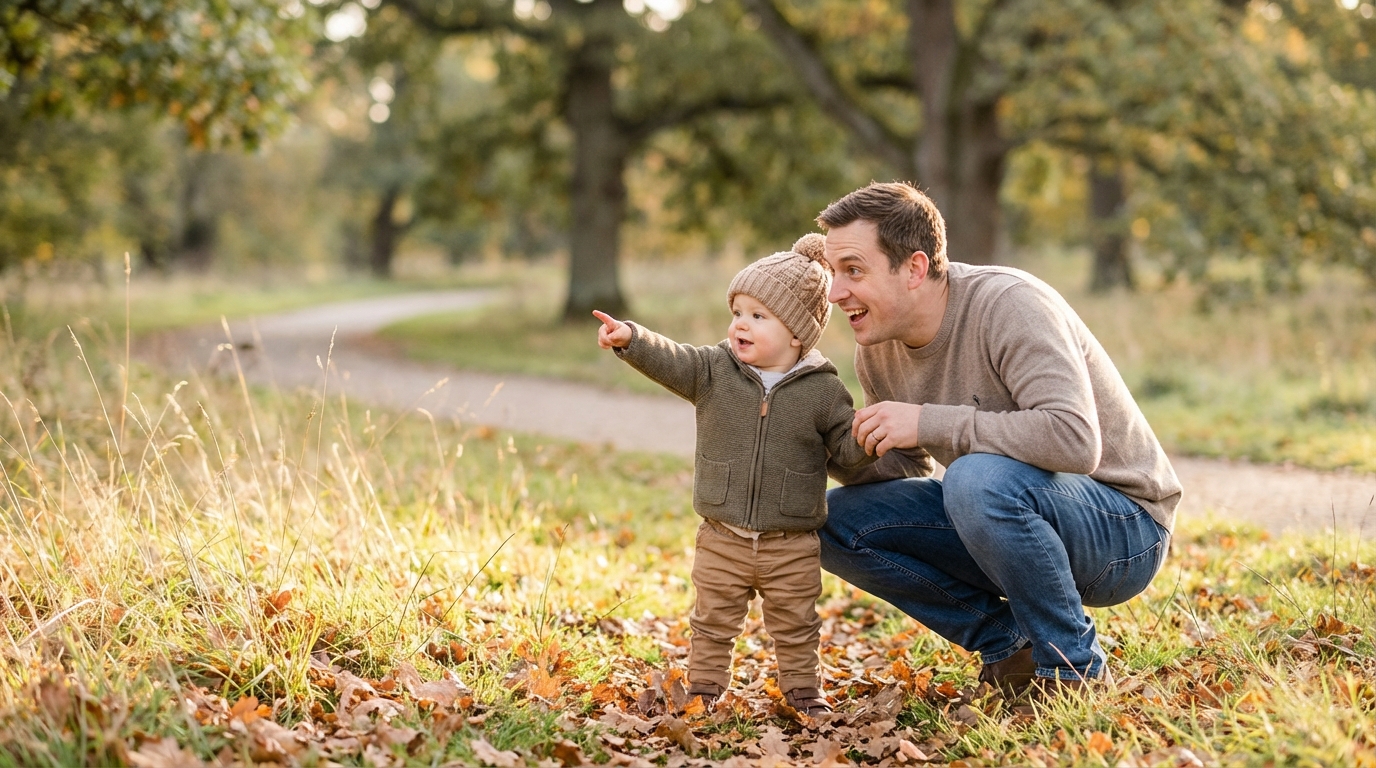
Babies invent words. And if your baby consistently uses a made-up word for a specific thing, that counts as vocabulary. Speech pathologists call these "protowords."
Some real examples from parents: "buh" for water, "gee" for pacifier, "nuh-nuh" for milk, "dis" for anything they're pointing at. One parent reported their baby calling every round object "baw" for months, including the moon.
These made-up words are worth writing down. Not because they're linguistically important (they are), but because you'll forget them. Two years from now, your toddler will be saying "water" and "pacifier" and "milk" like everyone else, and you won't remember what they called those things when they were 11 months old. Those weird little proto-words are some of the most specific, personal details of early parenthood.
If you're logging milestones in Aanvi, first words are one of the best things to save alongside photos and videos. A text entry that says "12/3, said 'buh' and pointed at the water cup, then did it three more times at dinner" is the kind of detail that brings back the whole scene when you read it a year later. The Baby Milestone Tracker shows where first words land among the other language and social milestones by age.
How to Encourage More Words
You don't need flashcards. You don't need a "teach your baby to read" program. According to the National Institute on Deafness and Other Communication Disorders (NIDCD), what works is simpler:
Narrate your life. "I'm putting on your shoes. These are your blue shoes. Let's go outside." Your baby is absorbing vocabulary from context. The more words they hear connected to actions and objects, the faster their own vocabulary grows.
Respond to their attempts. When they point and say "dah," say "Yes, that's a dog! The dog is sleeping." You're modeling the full word and adding context. This is called "expansion" and it's one of the most effective language-building techniques.
Read to them. Board books with simple pictures work. Point at things, name them, let your baby turn the pages. They won't sit still for a whole book until later, but even 2-3 minutes of shared reading matters.
Don't correct their pronunciation. If they say "ba" for ball, just say "Yes, ball!" back. They'll hear the correct version and adjust over time. Correcting ("No, say BALL") actually discourages kids from trying.
Skip the baby talk. Using a higher-pitched, sing-song voice is fine. A 2020 study from the University of Washington, published in PNAS, found that "parentese" (the sing-song voice parents naturally use) actually boosts language development, with coached parents seeing increased baby vocalizations and word production by 18 months. But use real words, not made-up baby versions. Say "bottle," not "ba-ba." The exception: if your baby invented a word for something, using their word back is great for connection.
The Word Explosion
Somewhere around 18-24 months, most toddlers go through what linguists call a "vocabulary explosion." They go from 10-20 words to 50+ in what feels like a few weeks. The NIDCD reports that by age 2, most children can say 50 or more words and start combining two words together ("more milk," "daddy go," "big truck").
When the word explosion hits, you will not be able to keep track of new words manually. They'll learn three new words on a Tuesday and you'll forget one of them by Thursday.
This is one of those milestones where having some way to jot things down matters more than you think it will. Even a notes app works. But something organized by date, where you can also attach a video of them saying the word for the first time, is better than the notes app graveyard.
Your baby's first words are the kind of milestone that feels permanent but fades fast. The specific sounds, the funny mispronunciations, the made-up words for everyday objects. Aanvi lets you save quotes, photos, and milestone notes together so you can actually find them later. Try it free for 7 days.