
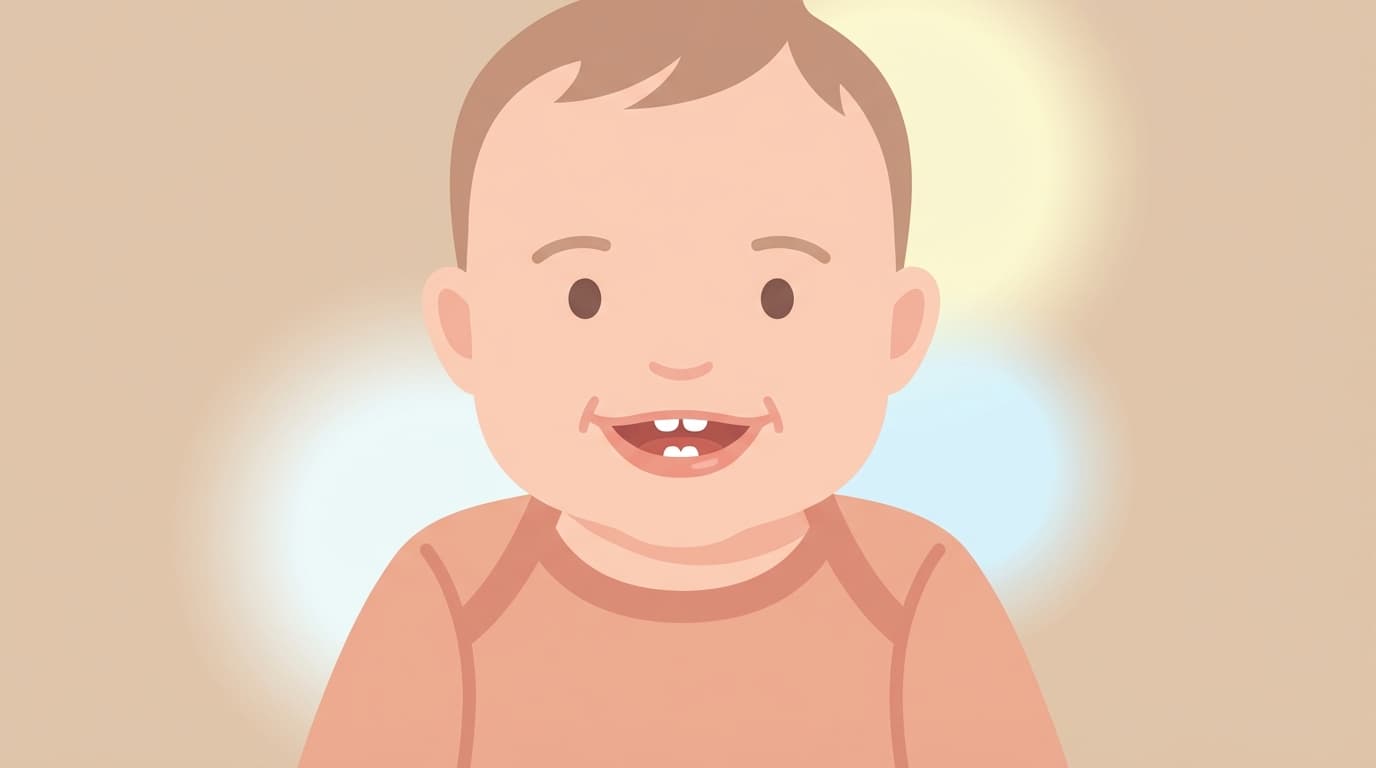
Your baby is drooling, fussy, and chewing on their own fist. Must be teething. Or maybe they're 3 months old and just discovered their hands. The line between teething symptoms and normal baby behavior is blurry, and it stays blurry for about a year.
When it starts
Most babies get their first tooth between 6 and 12 months. The Cleveland Clinic puts the average at about 6 months, but the range is wide. Some babies are born with teeth (natal teeth, which happens in about 1 in 2,000-3,000 births). Others don't get their first tooth until after their first birthday. Both are normal.
The bottom two front teeth (lower central incisors) usually show up first. After that, the top four front teeth. Then it fills in from the sides. By age 3, most kids have all 20 primary teeth.
Here's the rough order, though individual timing varies:
- 6-10 months: Bottom front two
- 8-12 months: Top front four
- 9-13 months: Upper lateral incisors (next to the front teeth)
- 10-16 months: Lower lateral incisors
- 13-19 months: First molars
- 16-23 months: Canines
- 23-33 months: Second molars
The molars are the worst. They're bigger, they're in the back where you can't easily see or reach them, and they take longer to break through. If your baby seemed fine with the front teeth and then falls apart around 14 months, the molars are probably why.
What teething actually causes
Teething produces a short list of real symptoms. The problem is that everything else gets attributed to teething too.
Real teething symptoms:
- Swollen, tender gums where the tooth is coming in
- Increased drooling (which can cause a chin rash from the constant moisture)
- Wanting to chew on things, hard
- Irritability, especially in the days right before and during eruption
- Disrupted sleep (sometimes, not always)
It's a shorter list than most parents expect.
What teething does not cause
This is where pediatricians and parents disagree most often.
Fever. Teething may cause a very slight temperature increase, but the AAP through HealthyChildren.org is clear: teething does not cause a true fever (100.4°F / 38°C or higher). If your baby has a temperature of 100.4°F or higher, call your pediatrician regardless of whether you think it's teething-related. A 2016 study published in Pediatrics (the AAP's journal) analyzed data from 16 studies across eight countries and confirmed that while gum irritation, irritability, and drooling increase during tooth eruption, significant fever does not.
If your teething-age baby has a real fever, it's probably an infection, not a tooth. The timing overlap is coincidental. Babies between 6 and 24 months get a lot of viral infections because their maternal antibodies are waning and their immune systems are still developing. This happens to be exactly the same period when teeth are coming in. Parents connect the two because the timing lines up, but correlation isn't causation.
Diarrhea. Same story. There's no mechanism by which a tooth cutting through gum tissue would cause loose stools. The likely explanation: babies who are teething put everything in their mouth (more than usual), introducing new bacteria to their digestive system. But the teething itself isn't the cause.
Ear pulling. Maybe. The jaw and ear share some nerve pathways, so referred pain is plausible. But ear pulling is also a classic sign of ear infections, and ear infections are common in this age range. If your baby is pulling their ears and has a fever, get the ears checked.
What actually helps
The evidence-based options are simple.
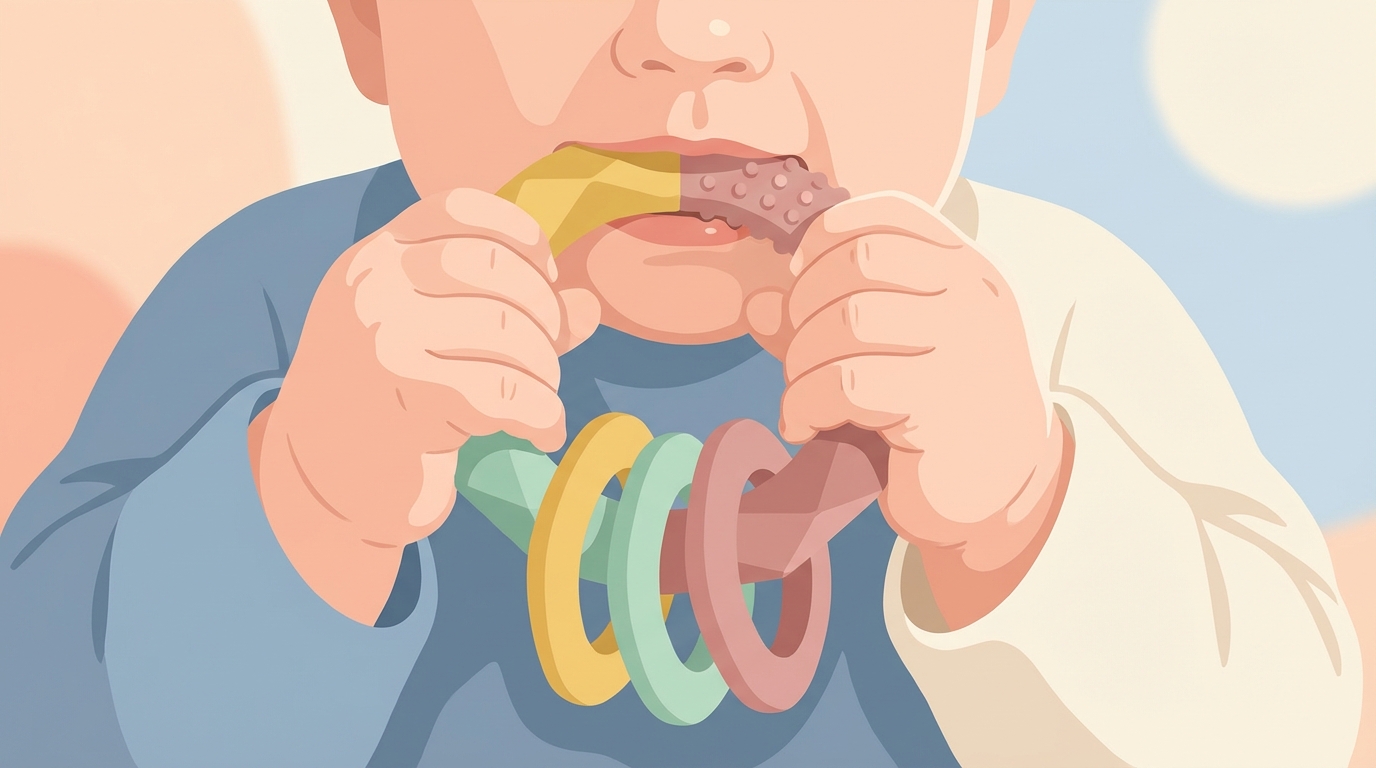
Cold pressure. A chilled (not frozen) teething ring, a cold wet washcloth, or a clean finger rubbing the gums. Cold reduces inflammation and numbs slightly. Frozen items are too hard and can bruise the gums.
Chewing. Teething babies want to bite down on things because counter-pressure on the gums feels good. Silicone teething toys, a thick rubber spatula, or a peeled and chilled carrot (for older babies who won't bite off chunks) all work. Supervision is required for anything that could break into pieces.
Pain relief when needed. If your baby seems in real pain, talk to your pediatrician about pain relief options. They can recommend the right medication and dosing for your baby's weight and age. Over-the-counter infant pain relievers like acetaminophen and ibuprofen exist, but your pediatrician should guide you on which one is appropriate and how much to give.
That's it. Three categories.
What to avoid
The FDA has issued specific warnings about two popular teething products.
Benzocaine gels and liquids (Orajel, Anbesol, and similar products). The FDA warned in 2018 that benzocaine can cause methemoglobinemia, a condition where the blood can't carry enough oxygen. It's rare but serious, and it disproportionately affects children under 2. The FDA asked manufacturers to stop marketing these products for teething. Some still sell them. Don't use them.
Homeopathic teething tablets containing belladonna. The FDA investigated reports of seizures and other adverse events in babies who used these products (including Hyland's teething tablets, which were eventually recalled). Testing found inconsistent and sometimes elevated levels of belladonna alkaloids. The products were marketed as "natural," which made them seem safe. They weren't.
Amber teething necklaces. No evidence they work. The theory (that amber releases succinic acid which reduces inflammation when warmed by body heat) has no scientific support. What they do reliably cause: a strangulation and choking risk. The AAP does not recommend them.
Caring for teeth once they arrive

Start brushing as soon as the first tooth appears. The American Academy of Pediatric Dentistry recommends using a soft infant toothbrush with a grain-of-rice-sized smear of fluoride toothpaste from the start, citing strong evidence for early fluoride in cavity prevention. Your pediatric dentist can advise on the right approach for your baby.
Schedule a first dental visit by age 1, or within 6 months of the first tooth, whichever comes first. This is the AAPD recommendation, though many parents don't know about it until later.
Logging the first tooth
The first tooth gets a lot of fanfare, but the rest of them arrive quietly. By the time you're on tooth number 8, you've probably stopped tracking. Which is fine, unless your pediatrician or dentist asks "when did the molars come in?" and you have no idea.
Aanvi lets you tag milestones like "first tooth" with a date and a photo (if you can get one, which with a drooling baby is its own challenge). The Milestone Tracker includes dental milestones alongside motor and language ones, so everything's in one place.
If teething has you wondering what's coming next on the developmental calendar, the Milestone Tracker covers teeth alongside motor and language milestones by age.