
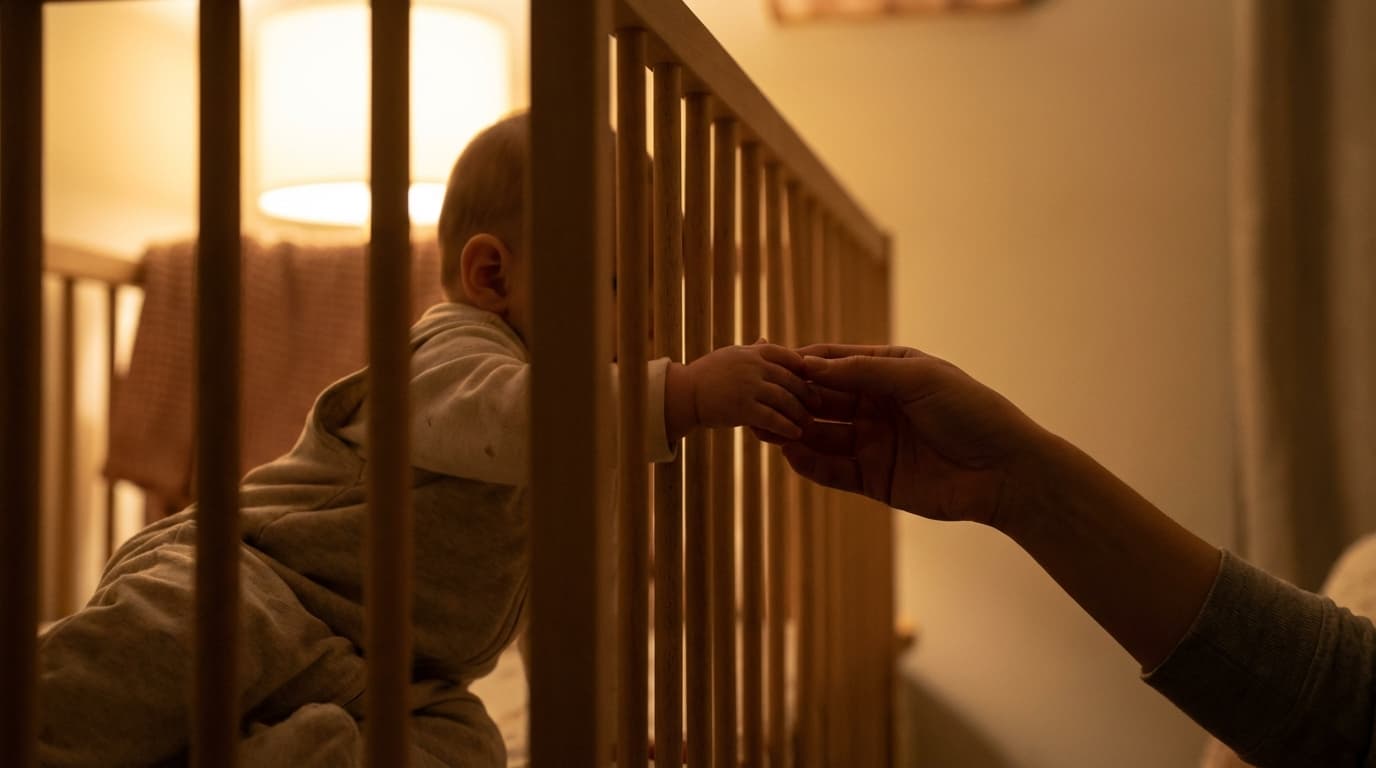
One day your baby is fine being passed to anyone. The next day you can't go to the bathroom without a meltdown. Nothing changed in your parenting. Your baby's brain just made a leap.
Separation anxiety is one of those milestones that doesn't feel like a milestone. Nobody celebrates it. But it means your baby has figured out something big: you exist even when they can't see you. That's object permanence, and it's a genuine cognitive achievement. The downside is they now know you've left, and they have no concept of when you're coming back.
When it starts
Most babies show the first signs between 6 and 12 months, with the most common window being 8-10 months. The timing tracks with object permanence development. Before that, out of sight literally meant out of mind. Now your baby understands that the person who feeds them and keeps them alive just walked away, and they have zero ability to predict when that person will return.
You'll notice it in stages. First your baby gets uneasy with strangers. People they were fine with a month ago suddenly get the stiff-arm treatment. Then the crying starts when you leave the room. Then bedtime, which was going okay, stops going okay.
The peak is rough
Separation anxiety peaks between 10 and 18 months according to the AAP, with the worst stretch usually between 8 and 10 months. There's often a second surge around 14-18 months.
The peak looks like this: your baby cries before you even start moving toward the door. They've learned your pre-leaving cues: picking up keys, putting on shoes, that specific tone of voice you use when you say "I'll be right back." They're not being manipulative. They're being observant, which is actually a sign of healthy cognitive development. Cold comfort when you're peeling a screaming toddler off your leg at daycare, but it's true.
Most kids work through it by age 2-3. Some take longer, and that's fine. The Children's Hospital of Philadelphia notes that separation anxiety that persists beyond age 3 or significantly interferes with daily activities could be worth discussing with your pediatrician, since that's when it may cross into separation anxiety disorder territory.
What it looks like, practically
The textbook signs are obvious: crying when you leave, clinging when you try to hand them off, reaching for you from someone else's arms. But there are subtler ones parents miss.
Sleep disruption is a big one. A baby who was sleeping through the night at 7 months might start waking multiple times at 8-9 months, and it's not a growth spurt or teething. It's separation anxiety messing with sleep. They wake up, realize you're not there, and panic. The 8-month sleep regression and separation anxiety often overlap, and it's hard to tell which is driving what.
Other signs: your baby suddenly won't let your partner hold them. They cry with grandparents they see every week. They follow you from room to room like a very small, very unstable shadow. They get tense in new environments that didn't bother them before.
All of it is the same root cause. Their world has a center, and it's you, and they need you to stay put.
What actually helps
There's no hack to skip separation anxiety. It's a developmental phase, not a problem to solve. But you can make it less miserable for everyone.
Practice leaving and coming back. Start tiny. Go to the next room for 30 seconds. Come back. Repeat. Gradually stretch the time. The point is building a track record: you leave, you return. Every time you come back, you're teaching them that leaving isn't permanent. The AAP recommends starting these mini-separations at home where your baby feels safest.
Say goodbye and mean it. The worst thing you can do is sneak out while they're distracted. It works once, and then they spend the next three months never taking their eyes off you because you might vanish without warning. Say a quick, calm goodbye. Keep it short. "Bye, I'll be back after your nap." Then leave. The drawn-out, teary goodbye makes it worse for both of you.
Don't come back when they cry. If you're doing a daycare drop-off and you turn around because they're screaming, you've just taught them that screaming brings you back. Most daycare providers will tell you the same thing: the crying usually stops shortly after you're out of sight. If it doesn't, they'll call you.
Build up other caregivers too. Let your partner, grandparents, or babysitter do more of the routine stuff. Feeding, bath time, bedtime. If your baby only associates comfort with one person, separations will hit harder. This takes time. There will be protests.
Transition objects work too, but only after 12 months. A favorite stuffed animal or blanket can help at daycare or bedtime. But the AAP warns against soft objects in the crib before 12 months due to suffocation risk. Before that, a worn t-shirt of yours near (not in) the crib can help. Your scent is the comfort object instead.
The daycare drop-off problem
Daycare is where separation anxiety gets real. Every morning feels like a hostage negotiation.
The research is consistent: short, predictable goodbyes are better than long ones. Build a ritual. Same words, same hug, same wave through the window. Stick to it. Consistency makes it predictable, and predictable things are less scary.
New parents sometimes ask whether they should delay starting daycare until after the separation anxiety phase passes. The Nemours Foundation (KidsHealth) suggests that if possible, try not to start daycare or a new caregiver between 8 months and 1 year, when separation anxiety first peaks. But plenty of families don't have that flexibility, and kids adjust. It takes longer during peak anxiety months, but they do adjust.
If your child starts daycare during a peak period, expect 2-3 weeks of rough drop-offs. It usually gets easier. If it hasn't improved after a month, check in with the daycare providers about what happens after you leave. That information is usually reassuring.
When it messes with sleep
This is the part that breaks parents. Your baby was sleeping fine. Now they're up every 2 hours, and it feels like the newborn days all over again.
What's happening: your baby falls asleep knowing you're there (or nearby). They wake during a normal sleep cycle transition, realize you're gone, and it triggers the same anxiety they feel during the day. They don't cry because they need a feed. They cry because they need to confirm you still exist.
Strategies that help:
- Spend extra time in the bedtime routine. Not longer stories or more songs, just unhurried presence.
- If they wake, go in briefly, reassure them you're there, and leave again. Keep it boring. Lights off, quiet voice.
- Don't restart sleep training methods during a separation anxiety peak. It's not the time. Wait for the phase to ease, then reassess.
- Keep their room consistent. Same sound machine, same temperature, same order of events. When everything else feels unpredictable, routine is grounding.
Since separation anxiety is a developmental milestone, it's worth tracking alongside the others. The CDC's milestone checklist tracks social-emotional development at each age, and separation anxiety behaviors map directly to the 9-month and 12-month markers. If you're using Aanvi to track your baby's milestones, the social-emotional category is where you'd log when separation anxiety started, when it peaked, and when it eased, useful context for your pediatrician if the timeline seems off.
When to actually worry
Separation anxiety by itself isn't a problem. It's a sign of secure attachment. But there are a few situations worth flagging with your pediatrician:
- Your baby shows zero separation anxiety at any age. Not even a little. Some babies are naturally more independent, but complete absence of stranger wariness by 9 months can sometimes warrant a conversation about attachment and social development.
- The anxiety is severe enough that your child can't function at daycare after a month of consistent attendance.
- It persists with the same intensity past age 3.
- It comes with other regression: loss of words they had, loss of motor skills, or avoiding eye contact.
In the vast majority of cases, separation anxiety is just a phase that makes months 8-18 feel longer than they are. Your baby will get through it. The evidence says so, even if the 6 AM daycare meltdown doesn't feel like evidence of anything except chaos.
Separation anxiety is one of the 40+ developmental milestones Aanvi tracks using the CDC checklist. If you want to log when it started, track how it's changing, and share updates with family, try Aanvi free for 7 days. The Milestone Tracker on the website is also free if you just want a quick check on where your baby stands.