
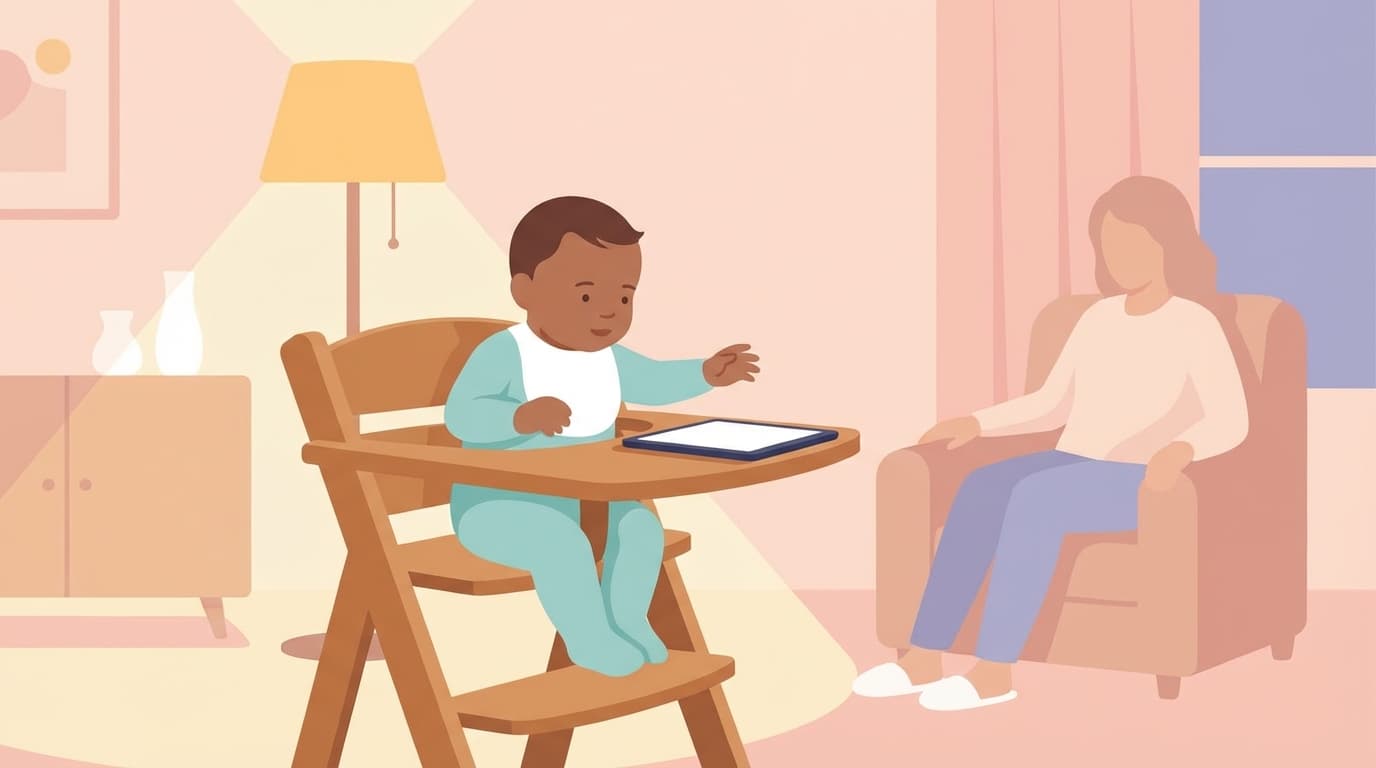
The AAP recommends no screen time for babies under 18 months except video calls, and no more than one hour of high-quality content per day for ages 2-5. The updated guidelines focus less on strict time limits and more on content quality, caregiver involvement, and what screen time is replacing.
If you've googled "baby screen time" you've probably seen some version of "no screens before age 2." The American Academy of Pediatrics updated their media use guidelines and the new framing is less about counting minutes and more about what happens during those minutes.
What actually changed
The old AAP recommendation, issued in 2016, was simple: no digital media for children under 18 months (except video calls), and no more than one hour per day for ages 2-5. Clean numbers. Easy to remember. Also nearly impossible to follow, which meant most parents either felt guilty or stopped caring.
The updated guidelines shift the emphasis from time limits to three things: quality of content, context of use, and whether a caregiver is present and engaged.
The under-18-months rule is still there. The AAP still recommends avoiding screens for babies under 18 months with the video-call exception. That part hasn't changed. What changed is how they talk about everything after that threshold.
The video call exception is worth understanding
The AAP has always exempted video calls from the "no screens" rule for babies under 18 months, and there's a reason. A screen showing a face that responds to the baby, reacts to their sounds, says their name, plays peekaboo through the camera, is genuinely different from a screen playing a colorful animation.
Babies as young as 6 months can recognize familiar faces on video calls and respond to them, according to research from Georgetown University's Early Learning Project. The interaction is what makes it different. It's not the screen itself that's the problem for developing brains. It's passive consumption versus active engagement.
This matters because a lot of parents feel guilty about FaceTiming grandparents. Don't. That's not what the guidelines are worried about.
Ages 18-24 months: the murky middle
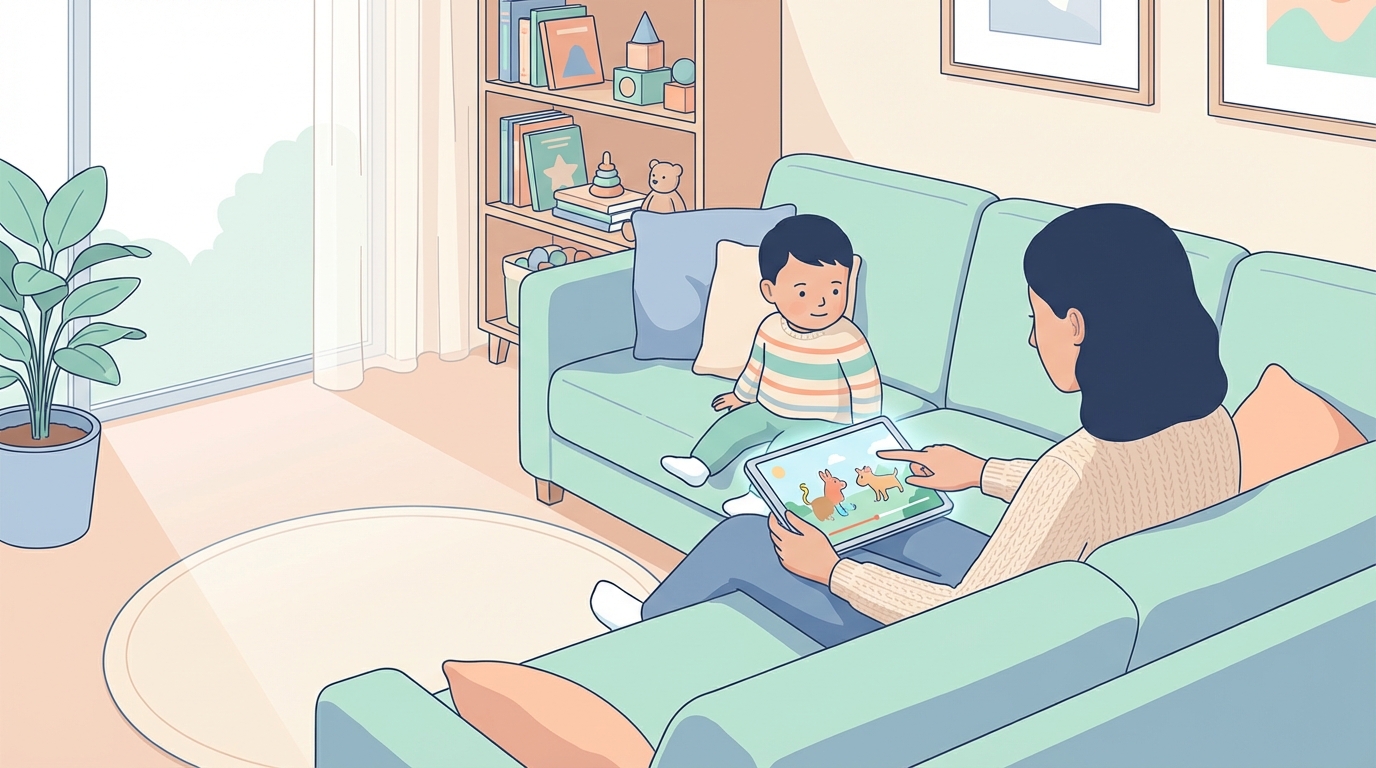
Between 18 and 24 months, the guidelines say screen time should be limited to educational programming watched with a caregiver. "Watched with" is doing most of the work in that sentence.
A toddler watching Daniel Tiger alone on an iPad while you cook dinner is a fundamentally different experience from a toddler watching the same show while a parent says "look, Daniel is sad, how does his face look?" The AAP is trying to make this distinction, though they know how it sounds. Parents don't always have someone available to co-view every minute of screen time, and the guidelines don't really address that reality.
What counts as "educational" is also vague. Nemours KidsHealth recommends looking for slow-paced programming that names objects, asks questions, and waits for responses. Sesame Street. Daniel Tiger. Not YouTube autoplay, which will take your toddler from a counting video to an unboxing video to something genuinely weird in about four taps.
Ages 2-5: one hour, but the clock matters less now
The AAP now recommends one hour of high-quality content daily for kids ages 2-5. But the tone of the recommendation has changed. They're spending less energy on the number and more on what happens around it.
Screens shouldn't replace sleep, physical activity, free play, or family meals. That's the priority list, in that order. If your 3-year-old watches 75 minutes of Bluey on a Saturday but also ran around outside, ate dinner with the family, and slept on schedule, the AAP isn't losing sleep over those extra 15 minutes.
What they are concerned about: screens used as the default activity. The difference between "we're watching a show together before bath time" and "they've been on the tablet since we got home because that's how the afternoon works."
What the research actually shows
The reason the guidelines exist at all comes down to two things: language development and sleep.
A 2019 study published in JAMA Pediatrics found that higher screen time at 24 months was associated with poorer performance on developmental screening tests at 36 months. The effect was small but consistent. Other studies, including a large Canadian cohort study published in the same journal, found similar associations between early screen time and delayed language skills.
The sleep data is less controversial. Screens before bed disrupt sleep across all ages. Blue light suppresses melatonin, and stimulating content makes it harder to wind down. The AAP recommends device-free bedrooms for all ages, and the evidence on this point is strong.
The catch: most of these studies show correlation, not causation. Kids who have more screen time might also have less parental interaction for other reasons (busier households, fewer resources, less access to outdoor play). Untangling those variables is hard. The effect of 20 minutes of a parent co-watching an educational show with their toddler is probably very different from the effect of three hours of unsupervised YouTube, but the studies often group all "screen time" together.
The practical version
Since the guidelines leave more room for judgment now, here's what they boil down to in practice:
Under 18 months: No screens except video calls with people who actually interact with the baby. Not "FaceTime playing in the background." Actual back-and-forth.
18-24 months: Short sessions of slow-paced educational content, ideally with you watching too and talking about what's on screen. This isn't the age for a 45-minute movie.
2-5 years: About an hour of quality content per day. Co-view when you can. Keep screens out of the bedroom and away from mealtimes. Make sure screen time isn't crowding out physical play, sleep, or conversation.
All ages: The things screens replace matter more than the screen time itself. If the alternative is running around outside, reading, or building with blocks, the screen is worse. If the alternative is a stressed parent who needs 20 minutes to make dinner without someone climbing the stove, the screen is fine.
What the guidelines don't say
Screens don't cause ADHD. This claim circulates on parenting forums constantly, and while some studies have found associations between heavy screen use and attention difficulties, the research doesn't support a direct causal link. The AAP hasn't made that claim.
Not all screen time is equal, either. An interactive educational app where a toddler traces letters is a different activity from passively watching unboxing videos. The guidelines treat them differently because they are different.
And nowhere in the updated recommendations does it say parents who use screens are failing. The tone is noticeably less prescriptive than the 2016 version.
Tracking it without obsessing over it
If you want a rough sense of where your family lands, Aanvi's Screen Time Calculator gives you age-appropriate benchmarks based on the current AAP recommendations. It's not about hitting a perfect number. It's about noticing patterns, like if screen time has been creeping up on weekdays and something else has been getting squeezed out.
For the developmental side, Aanvi tracks milestones against the CDC checklist, so you can see whether your baby is hitting language and motor milestones on schedule alongside whatever your screen habits look like. The two data points together are more useful than either one alone.
The AAP will probably update these guidelines again in a few years. The research is moving fast and the way kids use screens keeps changing. But the core idea is unlikely to shift: it's not about the screen. It's about what's on it, who's watching, and what it's replacing.
Common Questions
How much screen time should a baby have?
The AAP recommends zero screen time for babies under 18 months, with the exception of live video calls. For ages 18-24 months, short sessions of educational content watched with a caregiver are okay. Ages 2-5 should be limited to about one hour of high-quality programming per day.
Are video calls okay for babies under 18 months?
Yes. The AAP specifically exempts video calls from the no-screens rule for babies. Research from Georgetown University shows babies as young as 6 months can recognize and respond to familiar faces on video calls. The interactive, back-and-forth nature makes it fundamentally different from passive screen watching.
Does screen time cause developmental delays?
Studies in JAMA Pediatrics have found associations between higher screen time and delayed language development, but the effects are small and most research shows correlation, not causation. What matters more is what screen time replaces -- if it's cutting into sleep, active play, or caregiver interaction, those tradeoffs have clearer impacts.
When should I turn off screens before bedtime?
The AAP recommends device-free bedrooms for all ages, and the evidence on screens disrupting sleep is strong. Blue light suppresses melatonin and stimulating content makes it harder to wind down. Turning screens off at least an hour before bed gives the brain time to shift into sleep mode.