
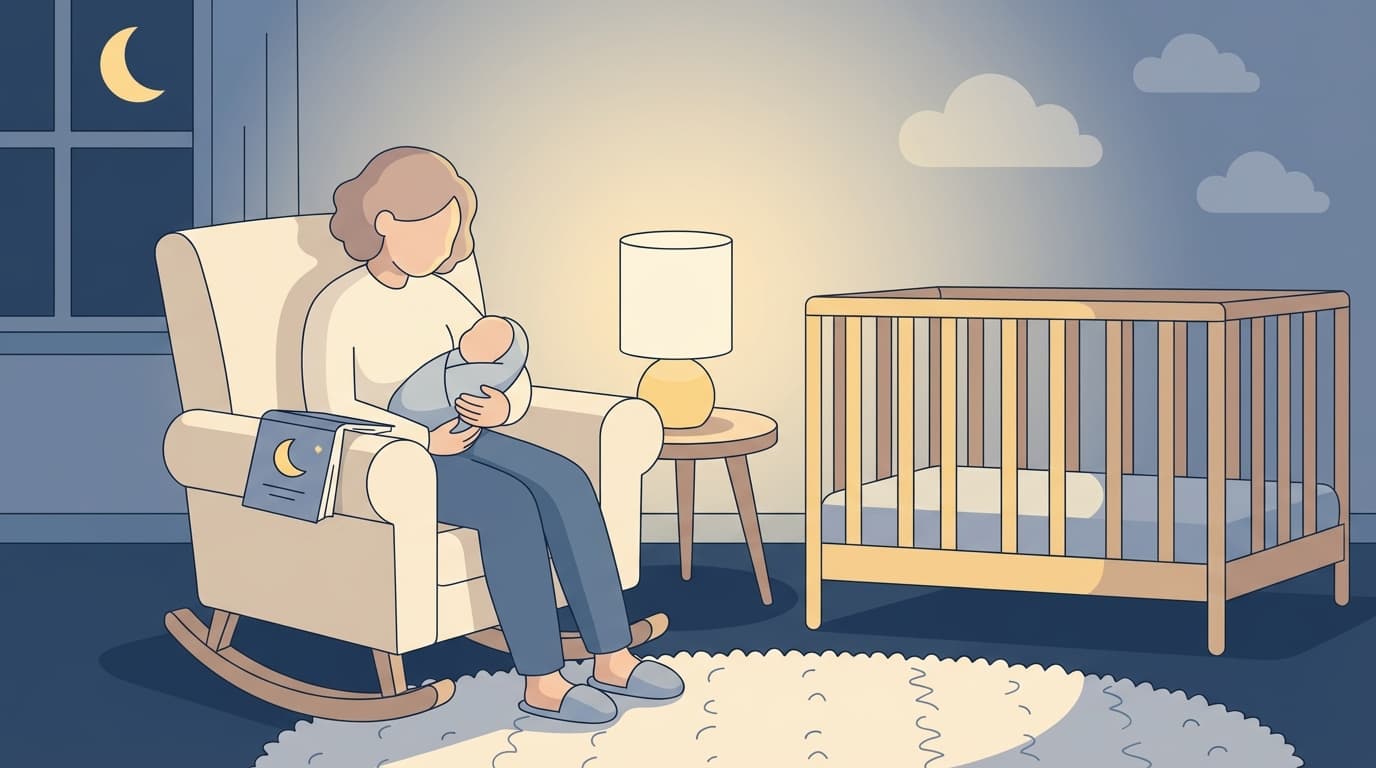
A good baby bedtime routine includes a bath, pajamas, a feeding, and a short book or song -- in the same order every night, taking 15-30 minutes total. Research published in the journal Sleep found that a consistent nightly routine improved sleep onset, reduced night wakings, and even improved maternal mood within three weeks.
You can start a loose routine from day one, but it really clicks around 6-8 weeks when babies begin developing their circadian rhythm. The tricky part is that the routine doesn't stay the same. What works at 6 weeks looks nothing like what works at 9 months.
When to Start
You can start loose bedtime habits from day one, but a real, consistent routine clicks into place around 6 to 8 weeks. That's when babies begin sorting out their circadian rhythm and distinguishing day from night.
Before that, you're in survival mode. The baby sleeps when they sleep. If you manage to do a bath before one of the seven nightly sleep stretches, great. Don't stress about a formal routine until the fog lifts a little.
The Building Blocks
Most bedtime routines pull from the same five or six activities. The order matters more than people think.

Bath. Not for cleaning (you don't need to bathe a baby every day). The warm water followed by cooler air triggers a slight drop in core body temperature, which signals the brain that sleep is coming. A 2019 systematic review and meta-analysis confirmed that bathing 1-2 hours before bed shortens the time it takes to fall asleep.
Pajamas and diaper. Simple, but the physical act of changing clothes is a transition cue. Same pajamas drawer, same order (diaper, then sleep sack or swaddle, then zip up). Babies pick up on the sequence faster than you'd expect.
Feeding. The last feed of the night. Whether it's breast or bottle, do this in a dimly lit room. Some parents put feeding before bath to avoid a feed-to-sleep association; others put it after because their baby is too hungry to sit through a bath. Either works. Pick one and stick with it.
Book or song. One short book or one song. Not three books and a medley. The point is a consistent signal, not entertainment. At 3 months they're not following the plot. By 8 months they'll have a favorite book and will scream if you try to swap it out, so choose wisely.
Into the crib. Drowsy but awake is the goal after about 4 months. Before that, putting them down asleep is fine. Don't let anyone guilt you about sleep associations in the newborn stage.
The whole routine should take 15 to 30 minutes. If it's creeping past 45 minutes, you're overcomplicating it.
How It Changes
The Newborn Phase (0-3 months)
Not really a routine yet. More like a sequence of events that sometimes happens in the right order. Bedtime is late, usually 9 or 10 PM, because newborns don't produce melatonin in meaningful amounts until around 9 to 12 weeks. The "routine" at this stage is: feed, change, swaddle, put down. Maybe a song if you have the energy. Some nights the whole thing falls apart and that's just how it goes.
3 to 6 Months
This is when it gets real. Bedtime shifts earlier, usually to somewhere between 7 and 8 PM. The baby starts to recognize the pattern. You'll notice they get calmer during the routine, or get fussy at bedtime if you skip steps. Keep the routine short and predictable.
One big change: you'll probably drop the swaddle around 3-4 months when they start rolling. Switch to a sleep sack. This is a bigger deal than it sounds because the swaddle was doing a lot of the soothing work, and suddenly it's gone. Expect a rough week.
6 to 12 Months
The routine is locked in now. They know what's coming. The challenge shifts from "establishing the routine" to "defending the routine." Teething, travel, illness, daylight saving time. All of these will try to blow it up. The best thing you can do is come back to the same sequence afterward. Babies bounce back to a routine faster than you'd think if the structure is familiar.
At this age, the book becomes the highlight. They'll grab for it, chew on it, demand the same one every single night. That's not stubbornness, that's the routine doing exactly what it's supposed to do.
What People Overthink
The exact bedtime matters less than you think. A 15-minute window beats hitting 7:00 PM sharp. Anywhere between 6:30 and 8:00 is fine for most babies over 4 months. Watch their cues, not the clock.
Same goes for the order of bath vs. feeding. It genuinely doesn't matter, as long as it's the same order every night.
And if you skip the bath one night because you're exhausted, that's not going to undo weeks of habit. Routines are resilient. The problem is when you skip half the steps for two weeks straight.
When It Stops Working
It will. Usually around 4 months (the famous sleep regression), again around 8-10 months, and again when they start walking and realize the crib is a prison.
When the routine stops working, the answer is almost always: keep doing the routine. Don't add new steps, don't extend it, don't start rocking them to sleep if you weren't doing that before. The regression passes. The routine survives it.
If you're tracking your baby's sleep patterns in Aanvi, logging bedtime and wake times during these rough patches is worth it. If you're not sure what time bedtime should land, the Baby Sleep & Wake Window Calculator suggests an age-appropriate wake window based on your baby's age and last nap. When you look back a week later and see the pattern normalizing, it's reassuring in a way that "it'll get better" never is.
A bedtime routine isn't going to solve every sleep problem. But it's the foundation that everything else sits on. Get the basics right, keep it short, and don't change it every time someone on Instagram suggests a new method. Your baby already knows what comes next, and that's the whole point.
Aanvi is a free app that tracks sleep, milestones, and daily routines. If you're in the thick of a rough patch and want to see whether things are trending better, having the data makes a difference.
Common Questions
When should I start a bedtime routine for my baby?
You can start loose bedtime habits from day one, but a consistent routine typically clicks into place around 6-8 weeks. That's when babies begin developing their circadian rhythm and can start distinguishing day from night. Before that, don't stress about formality -- just survive.
What should a baby bedtime routine include?
A solid routine includes a bath, pajamas and diaper change, a feeding, and one short book or song, followed by putting baby in the crib. Keep it to 15-30 minutes total. The specific order matters less than consistency -- pick a sequence and stick with it every night.
What time should a baby go to bed?
Most babies over 4 months do well with a bedtime between 6:30 and 8:00 PM. Newborns tend to sleep later (9-10 PM) because they don't produce meaningful melatonin until around 9-12 weeks. A 15-minute window is more realistic than hitting an exact time -- watch your baby's cues, not the clock.
What do I do when the bedtime routine stops working?
Keep doing the routine. Sleep regressions typically hit around 4 months, 8-10 months, and when they start walking. Don't add new steps, extend the routine, or introduce new sleep associations. The regression will pass, and sticking with the familiar sequence helps your baby bounce back faster.